Updated March 2026
Now live: Dallas-Fort Worth & Houston

Relocating to Texas — Your Complete 2026 Guide

340+ pages of verified data: neighborhoods, cost-of-living calculators, school ratings, employer maps, and interactive tools for Dallas, Houston, Austin & San Antonio.

Texas added more new residents than any other state in 2023 — over 470,000 people. Since 2018, 192 corporate headquarters have relocated to Texas, with 41.8% coming from California alone. The engine behind this growth is the Texas Triangle — the mega-region connecting Dallas-Fort Worth, Houston, Austin, and San Antonio — which generated $1.5 trillion in GDP and absorbed 88% of the state's growth over the past decade. With zero state income tax, a cost of living 6-8% below the national average, and four of America's fifteen most populous cities, Texas offers career opportunity at a scale no other state matches. But Texas is enormous — 268,000 square miles across wildly different climates, economies, and risks. Choosing Dallas when you belong in Houston — or Austin when San Antonio fits your budget — can cost you tens of thousands of dollars and years of frustration. This guide helps you choose the right city and avoid the surprises that catch newcomers off guard.

Choose Your City

Select a Texas city to explore your relocation guide

Why Texas?

The Lone Star State is America's top relocation destination — and the numbers speak for themselves.

Why Texas?

The Lone Star State by the numbers

0%

State Income Tax

0M+

Million Residents

0+

Fortune 500 Companies

0

Counties

2nd

Largest State

#1

Fastest-Growing

Dallas vs Houston vs Austin vs San Antonio — Which Texas City Is Right for You?

There is no single best city in Texas — the right choice depends entirely on your industry, family situation, and priorities. Dallas-Fort Worth leads for corporate careers and suburban schools. Houston dominates healthcare, energy, and aerospace. Austin is the tech and startup capital. San Antonio offers the highest affordability and military family support. Below is a data-driven comparison to help you decide.

The Texas Triangle — the megaregion formed by interstates connecting these four metros — holds over 20 million residents and generates the vast majority of the state's economic output. Each city has carved out a distinct economic identity, and understanding those differences is the first step to a successful relocation. Whether you are moving from California, relocating from New York, coming from Maryland, or arriving from anywhere else, the comparison below will help you narrow your search.

Economy

Metro Population
DFW7.6M
HOU7.5M
ATX2.4M
SA2.6M
Fortune 500 HQs
DFW21
HOU24
ATX6
SA2
RPP Cost Index
DFW103.3 (above avg)
HOU100.2 (average)
ATX97.6 (below avg)
SA93.7 (well below)
Key Industries
DFWFinance, Tech, Telecom, Defense
HOUEnergy, Healthcare, Aerospace, Port
ATXTech, Startups, Government
SAMilitary, Healthcare, Tourism

Housing

Median Home Value
DFW$365,614
HOU$307,804
ATX$433,332
SA$280,499
YoY Home Price Trend
DFW-3.8%
HOU-1.9%
ATX-5.8%
SA-3.2%
Avg Asking Rent
DFW~$1,636
HOU~$1,900
ATX~$1,575
SALowest in state
Property Tax (County)
DFW2.18-2.22% (Dallas)
HOU2.31% (Harris)
ATX2.07-2.18% (Travis)
SA1.99% (Bexar)

Lifestyle

Transit
DFWDART 93mi rail (best in TX)
HOUMETRORail 23mi
ATXCapMetro (limited)
SAVIA bus only
Electricity Market
DFWDeregulated (choose REP)
HOUDeregulated (choose REP)
ATXMunicipal (Austin Energy)
SAMunicipal (CPS Energy)
Top School District
DFWCarroll ISD (Southlake) A+
HOUKaty ISD, Friendswood ISD
ATXEanes ISD (Westlake) #1 in TX
SAAlamo Heights ISD A+

Risk

#1 Risk Factor
DFWTornadoes/Hail
HOUFlooding (Harvey: 160K homes)
ATXHousing cost ($433K median)
SALower salaries
Insurance Crisis
DFWModerate
HOUSEVERE (+21%/yr)
ATXModerate
SALow
Texas City Comparison Data
Category Factor Dallas-Fort Worth Houston Austin San Antonio Winner
Economy Metro Population 7.6M 7.5M 2.4M 2.6M Dallas-Fort Worth
Economy Fortune 500 HQs 21 24 6 2 Houston
Economy RPP Cost Index 103.3 (above avg) 100.2 (average) 97.6 (below avg) 93.7 (well below) San Antonio
Housing Median Home Value $365,614 $307,804 $433,332 $280,499 San Antonio
Housing YoY Home Price Trend -3.8% -1.9% -5.8% -3.2% Houston
Housing Avg Asking Rent ~$1,636 ~$1,900 ~$1,575 Lowest in state San Antonio
Housing Property Tax (County) 2.18-2.22% (Dallas) 2.31% (Harris) 2.07-2.18% (Travis) 1.99% (Bexar) San Antonio
Economy Key Industries Finance, Tech, Telecom, Defense Energy, Healthcare, Aerospace, Port Tech, Startups, Government Military, Healthcare, Tourism N/A
Lifestyle Transit DART 93mi rail (best in TX) METRORail 23mi CapMetro (limited) VIA bus only Dallas-Fort Worth
Risk #1 Risk Factor Tornadoes/Hail Flooding (Harvey: 160K homes) Housing cost ($433K median) Lower salaries N/A
Lifestyle Electricity Market Deregulated (choose REP) Deregulated (choose REP) Municipal (Austin Energy) Municipal (CPS Energy) N/A
Risk Insurance Crisis Moderate SEVERE (+21%/yr) Moderate Low San Antonio
Lifestyle Top School District Carroll ISD (Southlake) A+ Katy ISD, Friendswood ISD Eanes ISD (Westlake) #1 in TX Alamo Heights ISD A+ N/A

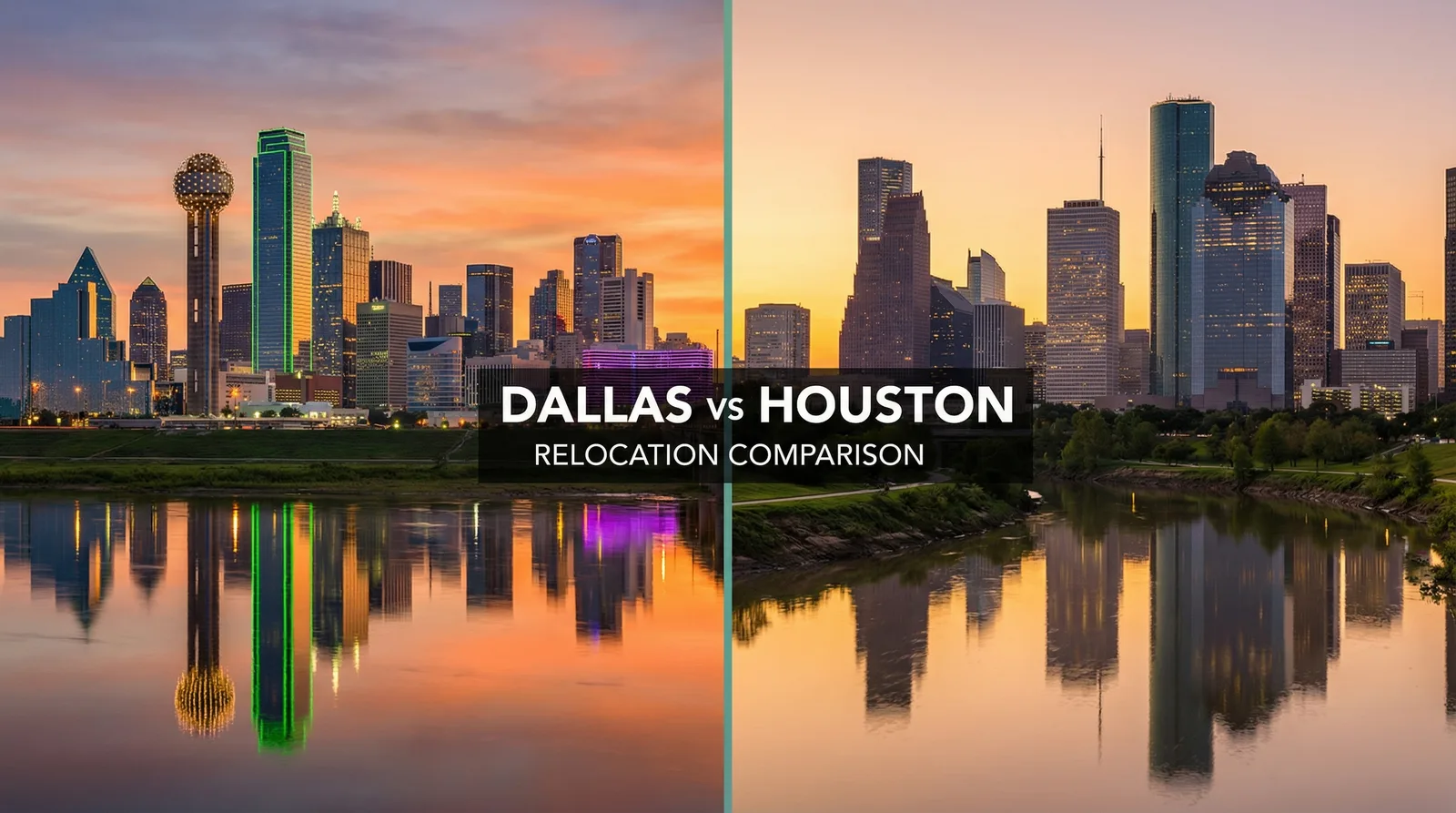
Dallas-Fort Worth

Best for Corporate Careers & Suburban Families
21 Fortune 500 HQs
93 mi DART Rail
$366K Median Home
Tornadoes Top Risk

If your relocation is driven by a corporate career, Dallas-Fort Worth should be at the top of your list. The metroplex is home to 21 Fortune 500 headquarters — including AT&T, Texas Instruments, Southwest Airlines, McKesson, and Kimberly-Clark — with more arriving every year. The finance and banking sector is anchored by Goldman Sachs' 5,000-employee campus in the Las Colinas Urban Center, while the Telecom Corridor in Richardson hosts a dense cluster of technology companies.

Read more

For families, the suburban school districts surrounding Dallas are among the best in the state. Carroll ISD in Southlake earns an A+ rating from Niche year after year. Grapevine-Colleyville ISD, Coppell ISD, Allen ISD, Lovejoy ISD, and Frisco ISD all rank in the top tier statewide. See our Best Cities for Families guide for detailed school district rankings.

DFW's DART light rail system covers 93 miles of track — the longest in Texas and one of the most extensive in the Sun Belt. Residents living in Uptown, the Arts District, or near downtown stations can commute without a car, though the vast majority of the metro remains car-dependent.

The trade-offs in DFW are real. Property taxes in Dallas County run 2.18-2.22%, among the highest in the state. Tornado season from March through June brings genuine risk — hail damage alone costs the metro hundreds of millions annually. Summer heat stretches from late May through mid-October, with July and August averaging highs of 100-105°F. Use the Cost-of-Living Calculator to see exactly how DFW stacks up against your current city.

Explore Dallas →

Houston

Best for Healthcare, Energy & International Diversity
24 Fortune 500 HQs
106K TMC Employees
$308K Median Home
Flooding Top Risk

Houston is the economic heavyweight of Texas. With 24 Fortune 500 headquarters — more than any other Texas city — Houston's economy is both massive and diverse. The Texas Medical Center (TMC) is the largest medical complex on Earth, employing over 106,000 people across 60+ institutions including MD Anderson Cancer Center (ranked #1 globally for oncology), Houston Methodist, Memorial Hermann, and Baylor College of Medicine.

Read more

The Energy Corridor along I-10 West employs over 94,000 workers at companies including ExxonMobil, ConocoPhillips, Phillips 66, Halliburton, and Baker Hughes. Houston's energy sector has evolved well beyond fossil fuels — the city is now a major hub for wind energy, hydrogen research, and carbon capture technology. NASA's Johnson Space Center in Clear Lake adds an aerospace dimension no other Texas city can match.

Houston is the most ethnically diverse large city in America, with over 145 languages spoken. Midtown, the Museum District, and Montrose offer walkable urban living with a restaurant and cultural scene that rivals much larger coastal cities.

However, Houston has a serious and growing problem: insurance. Homeowner insurance premiums surged 21% in 2023 and another 19% in 2024, driven by Hurricane Harvey's legacy (160,000 homes damaged), ongoing flood risk, and a litigation-heavy legal environment. Harris County property taxes at 2.31% add to the cost burden. Before committing to Houston, research flood zone maps carefully.

Explore Houston →

Austin

Best for Tech Careers & Outdoor Lifestyle
6+ Tech Giants
Eanes ISD #1 School
$433K Median Home
Cost Top Risk

Austin has transformed from a mid-size college town into a global technology hub. Dell Technologies, Apple (a $1 billion campus in North Austin), Google, Meta, Oracle (which moved its HQ from Silicon Valley), Tesla's Gigafactory in southeast Travis County, and Samsung's $17 billion chip fabrication plant in Taylor have created a tech ecosystem that rivals the Bay Area for certain specialties.

Read more

Eanes ISD, serving the Westlake Hills area, is ranked the #1 school district in Texas by multiple rating systems. Austin also leads Texas metros in walkability, with the South Congress, East Austin, and downtown corridors offering genuine pedestrian-friendly living. Lady Bird Lake, Barton Springs, the Greenbelt, and proximity to the Hill Country wine region make Austin the clear winner for outdoor recreation.

The catch is cost. Austin's median home value of $433,332 is the highest of any major Texas metro. Austin Energy is a municipal utility — meaning you cannot shop for a competitive electricity rate. CapMetro's transit system is limited. For those comparing Texas to California, Austin feels the most culturally similar but delivers real cost savings only at higher income levels. Coming soon.

Austin — Coming Soon

San Antonio

Best for Affordability & Military Families
$280K Median Home
93.7 Cost Index
1.99% Property Tax
Low Insurance

San Antonio is the value play among Texas major metros. With a median home value of just $280,499 and a Regional Price Parity of 93.7 — meaning everyday costs run 6.3% below the national average — San Antonio delivers a quality of life that stretches your income further than anywhere else in the Texas Triangle. For those moving from Colorado or coming from Florida, the affordability gap is dramatic.

Read more

Joint Base San Antonio (JBSA) — the Department of Defense's largest joint base — anchors the local economy and makes San Antonio the premier choice for military families, veterans, and defense contractors. Fort Sam Houston, Lackland AFB, and Randolph AFB together employ tens of thousands of military and civilian personnel.

CPS Energy is a municipal utility, meaning electricity rates are set rather than market-driven — a benefit for budget certainty. Bexar County property taxes at 1.99% are the lowest among the four major metros. The River Walk, the Alamo, and a growing culinary scene give San Antonio cultural appeal that surprises many newcomers.

The trade-offs: San Antonio's salary levels are generally lower than DFW, Houston, or Austin. Only 2 Fortune 500 companies (Valero Energy and USAA) are headquartered here. VIA Metropolitan Transit offers bus service only — no rail. For retirees and those who prioritize affordability over career ceiling, San Antonio is hard to beat. Coming soon.

San Antonio — Coming Soon

Choose Your City by Priority

Maximum corporate career options

21 Fortune 500 HQs, finance/tech/telecom hub

Dallas-Fort Worth

Best suburban schools

Carroll, Grapevine-Colleyville, Coppell, Allen — all A+

Dallas-Fort Worth

Healthcare / medical career

TMC: 106K employees, world's #1 cancer center (MD Anderson)

Houston

Energy sector

Energy Corridor: 94K employees, global energy capital

Houston

Tech / startups

Apple, Tesla, Google, Meta, Dell, Oracle HQs

Austin

Maximum affordability

$280K median home, 6.3% below avg COL

San Antonio

Military family

JBSA, Fort Sam Houston ISD, Randolph Field ISD

San Antonio

International community

#1 most diverse large US city, 145+ languages

Houston

Best public transit

93-mile light rail — longest in Texas

Dallas (DART)

Strongest outdoor lifestyle

Lady Bird Lake, Barton Springs, Hill Country

Austin

Lowest flood/storm risk

DFW gets tornadoes, Houston floods

San Antonio or Austin

Still not sure? Our Best Cities for Families and Best Cities for Young Professionals guides drill deeper into lifestyle factors. You can also compare Texas head-to-head against other states: Texas vs California, Texas vs Florida, Texas vs New York, and Texas vs Colorado.

0%

State Income Tax

$100K

Homestead Exemption

8.25%

Sales Tax Rate

2.0-2.5%

Property Tax Range

No Income Tax in Texas — But Here's What Replaces It

The biggest downside of living in Texas is property taxes. While Texas has zero state income tax — saving high earners $5,000 to $38,500+ per year compared to California, New York, or Maryland — the state compensates through property taxes that rank among the highest in the nation, typically 1.6% to 2.5% of assessed home value. Understanding this trade-off is essential before you relocate.

Texas is one of only nine states with no personal income tax, and unlike Tennessee or New Hampshire (which tax investment income), Texas imposes zero tax on wages, salaries, dividends, capital gains, and retirement income. This is enshrined in the Texas Constitution, Article VIII, Section 24-a. For Californians paying up to 13.3% or New Yorkers paying up to 10.9%, the savings are transformative.

0%

State Income Tax

Protected by TX Constitution Art. VIII §24-a

$100K

Homestead Exemption

File by April 30 — saves $1,200-$1,800/yr

8.25%

Sales Tax

6.25% state + 2% local in all major metros

~3.5×

Crossover Point

Home value > 3.5× income erodes savings

Property Tax Rates by County

  • Fort Bend Highest
    Sugar Land, Katy
    2.41-2.48%
    $9,640-$9,920
  • Tarrant
    Fort Worth, Arlington
    2.37%
    $9,480
  • Harris
    Houston
    2.31%
    $9,240
  • Collin
    Plano, Frisco, McKinney
    2.19-2.23%
    $8,760-$8,920
  • Williamson
    Round Rock, Georgetown
    2.22%
    $8,880
  • Dallas
    Dallas
    2.18-2.22%
    $8,720-$8,880
  • Travis
    Austin
    2.07-2.18%
    $8,280-$8,720
  • Bexar Lowest
    San Antonio
    1.99%
    $7,960
Texas County Property Tax Rates on a $400,000 Home
County Major City Effective Rate Annual Tax on $400K Home
Fort Bend Sugar Land, Katy 2.41-2.48% $9,640-$9,920
Tarrant Fort Worth, Arlington 2.37% $9,480
Harris Houston 2.31% $9,240
Collin Plano, Frisco, McKinney 2.19-2.23% $8,760-$8,920
Williamson Round Rock, Georgetown 2.22% $8,880
Dallas Dallas 2.18-2.22% $8,720-$8,880
Travis Austin 2.07-2.18% $8,280-$8,720
Bexar San Antonio 1.99% $7,960

Income Tax Savings by Income Level

Approximate annual state income tax savings when moving to Texas from selected high-tax states.

$75,000

  • California $6,000
  • New York $4,800
  • Maryland $4,200
  • Illinois $3,700

$150,000

  • California $15,000
  • New York $12,000
  • Maryland $10,500
  • Illinois $7,400

$300,000

  • California $38,500
  • New York $30,000
  • Maryland $25,000
  • Illinois $14,800

At a $150,000 household income, a family moving from California saves roughly $15,000 per year in state income tax alone. Even after accounting for higher property taxes on a $400,000 home in Dallas County (~$8,800/year vs ~$4,400 in a comparable California county), the net savings are still approximately $10,000 annually. Use the Salary Comparison Calculator to model your specific situation.

The Homestead Exemption — Do Not Forget This

Texas offers a homestead exemption that reduces the taxable value of your primary residence by $100,000 for school district taxes. On a $400,000 home, this means school district taxes are calculated on $300,000 — saving roughly $1,200 to $1,800 per year. The exemption also caps annual appraised value increases at 10%.

The critical detail: the homestead exemption is not automatic. You must file with your county appraisal district and the deadline is April 30. New residents who buy a home and forget to file lose an entire year of savings.

Sales Tax — The Other Revenue Source

Texas also relies heavily on sales tax. The state rate is 6.25%, and every major metro adds the maximum 2% local rate for a combined 8.25%. Groceries are exempt, but restaurant meals, clothing, electronics, and most services are taxed. For a family spending $60,000 annually on taxable goods, that translates to roughly $4,950 in sales tax per year.

Where Is the Crossover Point?

The crossover point — where Texas property taxes cancel out your income tax savings — depends on your income, home value, and origin state. As a rough rule: if your home value exceeds approximately 3.5 times your annual income, the property tax burden begins to erode your savings. The lesson: buy below your maximum budget, choose a lower-tax county, and file your homestead exemption on day one.

How Renters Are Affected

Landlords pass property tax costs through to tenants via higher rents. Economists estimate that 80-100% of property tax increases are reflected in rent within 12-18 months. This is one reason Chicago transplants sometimes find Texas rents higher than expected. For a complete picture, compare total cost of living using our Cost-of-Living Calculator. Renters moving from New York should also factor in that Texas has no renter's tax credit or deduction.

Annual Income Tax Savings by Moving to Texas

Approximate annual savings by household income and origin state

Based on 2024-2025 state income tax rates applied to gross household income. Actual savings vary based on filing status, deductions, and local taxes.

Get the Texas Insider Newsletter

Weekly tips, neighborhood insights, and a free PDF relocation checklist.

No spam. Unsubscribe anytime. We respect your privacy.

Texas Electricity Is Different — Here's How It Works

Texas operates its own electrical grid — the Electric Reliability Council of Texas (ERCOT) — which is deliberately isolated from the two national grids. This isolation means Texas is exempt from FERC oversight but also cannot easily import power during extreme weather. The Winter Storm Uri crisis of February 2021 was a direct consequence of this isolation. New residents should understand that the Texas grid operates under different rules.

ERCOT
Grid
Independent from US grids
1,096-1,146 kWh/mo
Avg Usage
20% above national avg
15.3-16.2¢/kWh
Rate
Below national avg per kWh
$250-$400/mo
Peak Bills
July-August for larger homes

Deregulated

You choose your provider

Dallas-Fort Worth

TDU: Oncor

Choose from 50+ REPs

You choose your rate
Houston

TDU: CenterPoint

Choose from 50+ REPs

You choose your rate

Municipal

One provider, one rate

Austin

Provider: Austin Energy

ℹ️ Simpler, but no rate shopping
San Antonio

Provider: CPS Energy

ℹ️ Simpler, but no rate shopping

Critical Warning: Lock Your Rate

In deregulated areas, when your fixed-rate contract expires, most REPs automatically switch you to a variable rate that can be 50-100% higher. A family paying 11¢/kWh can suddenly pay 18-22¢/kWh — adding $80-$120/month. Lock a fixed-rate plan and set a 45-day calendar reminder before expiry.
TDU vs. REP — The Split You Need to Understand

In deregulated areas, your electricity service involves two entities. The TDU (Transmission and Distribution Utility) owns the power lines — Oncor in DFW, CenterPoint in Houston. The REP (Retail Electric Provider) is the company you choose that buys wholesale electricity and sells it to you. Your REP handles billing and rate plans. When comparing plans, add TDU delivery charges (3-5¢/kWh) to the advertised rate.

Why Texas Electric Bills Are Higher Than You Expect

Texas homes consume roughly 20% more electricity than the national average — 1,096 to 1,146 kWh/month vs 894-929 kWh nationally. The reason: air conditioning runs 5-6 months per year. While the per-kWh rate is lower than many states, higher volume means monthly bills land in the $165-$185 range, with peak summer months hitting $250-$400 for larger homes.

Solar Panels — Different Economics in Texas

If you are installing solar panels, the economics differ between deregulated and municipal areas. In Austin and San Antonio, net metering policies set by the municipal utility determine your payback period. In DFW and Houston, you need a REP that offers a solar buyback plan — not all do. For those relocating from California where solar is prevalent, the economics are very different in Texas.

Use PowerToChoose.org to compare REP plans before you move. Read the full breakdown in our Texas Electricity Guide.

Calculate Your Texas Cost of Living

Compare your current city to any Texas metro — see exactly how far your dollar goes

What Every New Texan Must Do — Deadlines & Requirements

Moving to Texas involves a specific sequence of administrative tasks, several with firm legal deadlines. Missing these deadlines can result in fines, registration rejections, or gaps in coverage. Work through this list in order.

  1. Step 1 Before Move-In

    Set Up Electricity

    No default provider in deregulated areas — no account means no power
    In deregulated areas (most of DFW and Houston), you must select a Retail Electric Provider and activate service before you move in. Unlike most states, there is no default provider. Use powertochoose.org to compare plans. Choose a fixed-rate plan of 12+ months. In Austin or San Antonio, contact the municipal utility directly.
    Electricity Guide →
  2. Step 2 Before Registration

    Auto Insurance

    Required before you can register your vehicle
    Texas requires proof of auto insurance before vehicle registration. Minimum liability: 30/60/25 ($30K per person, $60K per accident bodily injury, $25K property damage). Carry proof at all times. If moving from a no-fault state (Michigan, New York, Florida), you'll need a standard liability-based policy.
  3. Step 3 Within 30 Days

    Vehicle Registration

    $7.50 inspection replacement fee + $90 new-resident tax
    Texas law requires registration within 30 days. HB 3297 abolished annual safety inspections as of January 2025, but emissions testing is still required in 17 counties covering all four major metros. Expect a $7.50 inspection replacement fee plus a $90 new-resident tax at registration.
    Registration Guide →
  4. Step 4 Within 90 Days

    Texas Driver's License

    Book a DPS appointment early — walk-in waits exceed 2 hours
    Visit a DPS office with your current license, proof of identity, proof of Social Security number, and two documents proving Texas residency. If your out-of-state license is valid, you're generally exempt from the written and driving tests — vision screening only. Book an appointment — walk-in waits regularly exceed two hours.
    Driver's License Guide →
  5. Step 5 First Week

    Toll Tag

    Without a tag, toll rates are 50%+ higher via ZipCash
    Without a toll tag, ZipCash bills you by mail at 50%+ higher rates. In DFW, get an NTTA TollTag. In Houston, HCTRA EZ TAG. TxTag works statewide. We recommend NTTA TollTag for DFW and TxTag for frequent metro-to-metro travelers.
    Toll Roads Guide →
  6. Step 6 File by April 30

    Homestead Exemption

    Missing the deadline = losing $1,200-$1,800 in tax savings
    If you purchase a home, file your homestead exemption with your county's appraisal district immediately. This reduces school district taxable value by $100,000 and caps annual appraised value increases at 10%. Missing the April 30 deadline costs you $1,200-$1,800 in unnecessary taxes.
    Property Tax Guide →
  7. Step 7 30 Days Before Election

    Voter Registration

    Texas requires voter registration at least 30 days before an election. Register online through the Texas Secretary of State's website or by paper application. Texas does not offer same-day registration. Register as soon as you have a Texas address.
  8. Step 8 Within 10 Days

    USCIS Address Change (Non-Citizens)

    10-day federal deadline — misdemeanor offense if missed
    Federal law (INA Section 265) requires non-citizens to file a change of address with USCIS within 10 days. File Form AR-11 online at uscis.gov. Failure to report is a misdemeanor that can affect future immigration applications.

The first two weeks after your move are the most administratively intensive — schedule a DPS appointment, visit the county tax office, and set up your toll tag early to avoid peak-season backlogs (May through August).

"

Texas added more new residents than any other state in 2023 — over 470,000 people.

U.S. Census Bureau, 2024

Where Texas Is Growing Fastest — The Exurban Boom

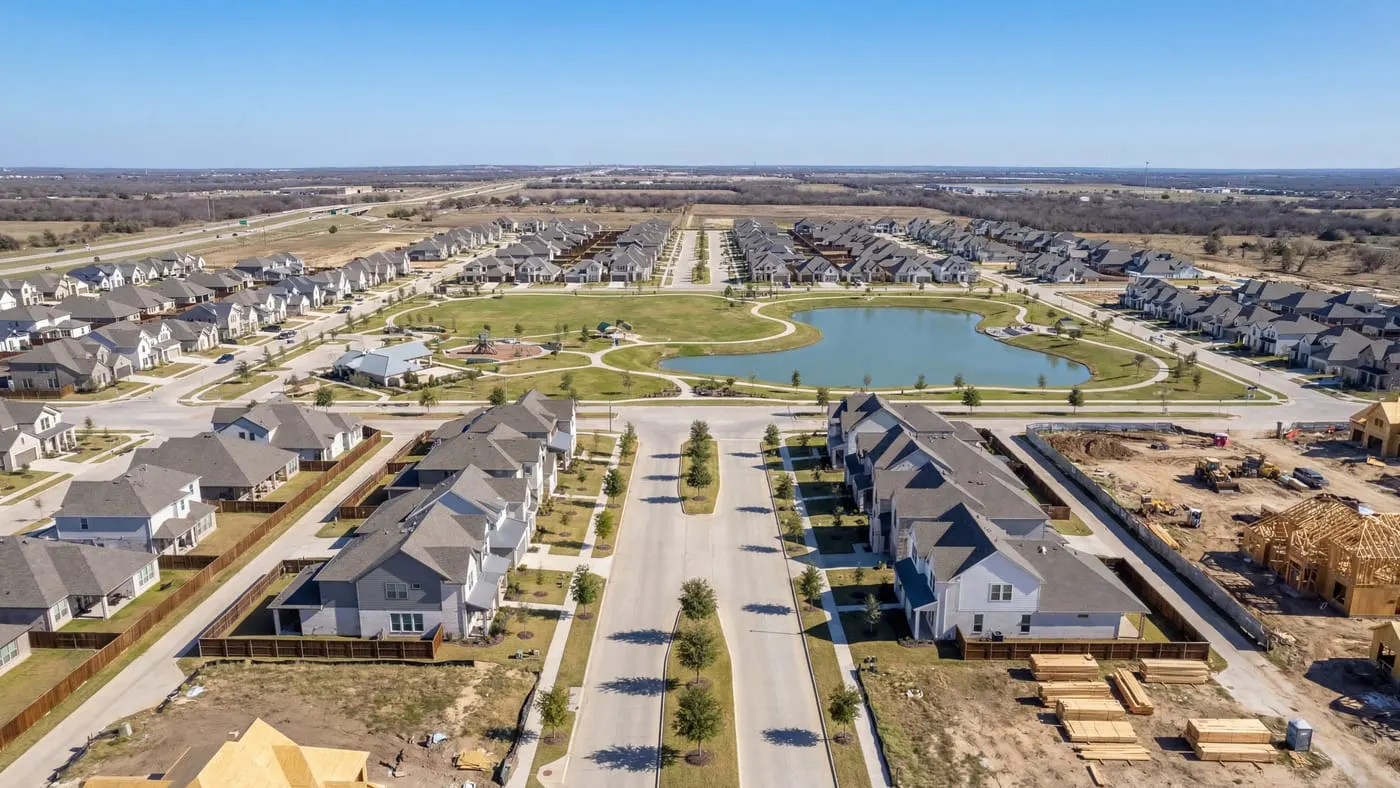
Seven of the fifteen fastest-growing cities in America are in Texas, and the pattern is clear: growth is concentrated not in the urban cores but in the exurban ring — the band of communities 30 to 50 miles from downtown, where new master-planned developments offer larger lots, newer schools, and lower price points than established inner suburbs.

7 of 15 fastest-growing US cities are in Texas

The exurban boom is reshaping Texas metro areas

DFW Growth Corridor

US-380 / Northern Collin & Denton
Celina 16.41%
Princeton 30.6%
Melissa 10%+
Celina: #1 fastest-growing city in America (16.41%)

The most explosive growth in Texas is happening along US-380 in northern Collin and Denton counties. The Dallas North Tollway extension is pushing northward and dramatically improving commute times from these exurban communities to corporate employment centers in Plano, Richardson, and Las Colinas.

Read more

Prosper represents the sweet spot: an A-rated school district (Prosper ISD), proximity to the Tollway, and home prices below Southlake and Westlake levels.

Houston Western Expansion

I-10 / Grand Parkway (SH-99)
Fulshear 26.9%
Katy Steady
Cypress/Bridgeland Rapid
Fulshear: 26.9% growth, Fort Bend County

The westward push along I-10 and the Grand Parkway (SH-99) has created a parallel boom. Fulshear's appeal is newer construction, strong Lamar Consolidated ISD schools, and proximity to the Energy Corridor employment hub. Katy ISD remains one of the top-rated large districts in Texas.

SA-Austin I-35 Corridor

I-35 between San Antonio & Austin
New Braunfels 35%
Georgetown Rapid
New Braunfels: 35% growth since 2020, 124K+ residents

New Braunfels, positioned along I-35 between San Antonio and Austin, has grown 35% since 2020. It's no longer a small town — it's a mid-size city with a $1.3 billion tourism economy. Many transplants from Chicago and the Midwest are choosing these corridor communities.

What Exurban Growth Means for Homebuyers

Buying in a high-growth exurban community offers potential appreciation and newer housing stock, but it comes with trade-offs. Our Property Tax Guide explains MUD rates and how to look up the total tax burden for any address.

Infrastructure often lags behind rooftops — roads, schools, and retail may be under construction for years
Commute times to urban employment centers can be long, especially via toll roads ($50-$200/month)
MUD (Municipal Utility District) tax rates in newer developments can push effective rates above 3%

Texas Essentials

Guides every new Texan needs, no matter which city you choose

Moving to Texas From...

State-specific guides with cost comparisons, tax savings, and what to expect

Texas vs Other States

Data-driven comparisons for relocators weighing their options

Best Texas Cities For...

Curated rankings based on what matters most to you

Everything You Need in One Place

Each city guide includes interactive tools, data-driven insights, and actionable resources.

🏘️

40+ Neighborhoods

Relocation scores, rent data, walk scores, and school info for every area

🏢

30+ Employers

Campus locations, commute maps, and best neighborhoods for each company

🧮

5 Calculators

Cost of living, rent vs buy, moving cost, commute, and salary comparison

Vendor Directory

Movers, realtors, insurance, internet, and more — vetted and reviewed

🎓

School Ratings

TEA ratings, enrollment stats, and programs for every district

Moving Checklists

Step-by-step guides for your first week, 30 days, and 90 days

🛋️

Furnished Housing

Move-in ready apartments with flexible leases through FAD

🏆

Best-For Guides

Curated neighborhood picks for families, YPs, walkability, and more

Frequently Asked Questions About Moving to Texas

Is moving to Texas a good idea?
Moving to Texas is a good idea for most working professionals and families seeking affordable big-city living, career growth, and zero state income tax. A household earning $150,000 saves approximately $10,500 to $15,000 per year in state income tax compared to California, New York, or Maryland. The job market is robust — Texas added more jobs than any other state in 2023, led by the DFW and Houston metros. However, the trade-offs are real: property taxes run 1.6-2.5% of home value, summers bring 95-105°F heat for four to five months, most cities require a car, and homeowner insurance costs are rising sharply, especially in Houston. If you are coming from a high-tax state with a stable income and can tolerate heat, Texas delivers genuine financial advantages that compound year over year.
Why is Gen Z moving to Texas?
Gen Z is moving to Texas because the state offers high-paying jobs without income tax, affordable rent compared to coastal cities, and a vibrant social scene in urban cores like Austin's East Side, Dallas's Deep Ellum, and Houston's Montrose. Entry-level tech salaries in Austin and DFW often match or exceed Bay Area offers once you factor in cost of living, and the startup ecosystem provides entrepreneurial opportunities that do not require a Silicon Valley zip code. Rent in Dallas averages $1,636 versus $3,400+ in San Francisco or $3,100+ in Manhattan. The combination of career density, affordability, and nightlife makes Texas metros the top destination for workers aged 22-30, according to Census migration data. The main complaints from younger transplants: car dependency, limited walkability outside a few urban pockets, and summer heat that restricts outdoor activity from June through September.
What is the downfall of living in Texas?
The biggest downfalls of living in Texas are high property taxes (1.6-2.5%), extreme summer heat (95-105°F for 4-5 months), car-dependent cities with limited public transit, severe weather (tornadoes in DFW, flooding in Houston), and a rapidly escalating homeowner insurance market. Property taxes in counties like Fort Bend (2.48%) and Tarrant (2.37%) can cost $8,000-$10,000 annually on a median-priced home, partially offsetting the income tax savings. The insurance crisis is most acute in Houston, where premiums rose 21% in 2023 and 19% in 2024 following Hurricane Harvey and ongoing litigation costs. The electrical grid operates independently from the rest of the country (ERCOT), which creates vulnerability during extreme weather. Finally, toll road costs ($50-$200/month for many commuters) are an expense that surprises newcomers from states with free highways.
What is the #1 city to move to in Texas?
There is no single #1 city — it depends on your industry and priorities. Dallas-Fort Worth leads for corporate careers and suburban schools, with 21 Fortune 500 headquarters and top-rated districts like Carroll ISD, Coppell ISD, and Allen ISD. Houston leads for healthcare (Texas Medical Center, 106K employees), energy (Energy Corridor, 94K employees), and aerospace (NASA JSC). Austin leads for tech and startups, hosting Apple, Tesla, Google, Meta, Dell, and Oracle operations. San Antonio leads for affordability ($280K median home) and military families (Joint Base San Antonio). The decision matrix in our city comparison section above matches your specific priorities to the right metro. If you want the broadest job market with the best balance of career options and family infrastructure, DFW edges out the competition — but Houston and Austin are stronger choices for specific industries.
How much does it cost to live in Texas?
The cost of living in Texas varies by metro but runs 2-8% below the national average in most areas. The Bureau of Economic Analysis Regional Price Parity (RPP) index rates San Antonio at 93.7 (6.3% below average), Austin at 97.6, Houston at 100.2 (right at average), and Dallas-Fort Worth at 103.3 (slightly above). Median home prices range from $280,499 in San Antonio to $433,332 in Austin. Average rent ranges from about $1,400 in San Antonio to $1,900 in Houston. A family of four with a household income of $120,000 can live comfortably in DFW or Houston, and very well in San Antonio. The major cost surprises for newcomers are property tax ($7,000-$10,000/year), electricity ($175-$350/month depending on season), and toll roads ($50-$200/month). Use our Cost-of-Living Calculator to model your specific budget.
Does Texas have state income tax?
No. Texas has zero state income tax on wages, salaries, interest, dividends, capital gains, and retirement income. This is not merely a legislative policy — it is embedded in the Texas Constitution (Article VIII, Section 24-a), which requires a statewide voter referendum before any income tax could be enacted. This means the zero-income-tax status is extremely unlikely to change. However, Texas compensates for this lost revenue through property taxes that rank among the highest in the nation (typically 1.6-2.5% of home value) and an 8.25% combined sales tax rate in all major metros. The net benefit depends on your income level, home value, and origin state. See our Property Tax Guide for a full analysis.
What are property taxes like in Texas?
Texas property taxes are among the highest in the country, with effective rates ranging from about 1.6% in rural areas to 2.5% in suburban counties near major metros. The highest rates are found in Fort Bend County (2.41-2.48%), Tarrant County (2.37%), and Harris County (2.31%). On a $400,000 home, you can expect to pay $7,960 (Bexar County/San Antonio) to $9,920 (Fort Bend County/Sugar Land). Texas offers a homestead exemption that reduces your school district taxable value by $100,000 — but you must file for it by April 30, as it is not automatic. Additionally, Municipal Utility Districts (MUDs) in newer suburban developments can add 0.5-1.0% on top of the standard rates, pushing effective rates above 3% in some exurban communities. Always research the full tax rate at your specific address, not just the county average. Full details: Property Tax Guide.
Is Texas cheaper than California?
Yes, Texas is substantially cheaper than California for most households. At a $150,000 household income, you save approximately $15,000 per year in state income tax alone by moving from California to Texas. Housing costs reinforce the gap: the median home in Dallas-Fort Worth ($365,614) or Houston ($307,804) costs roughly half of what comparable homes cost in the Bay Area or Los Angeles. A three-bedroom suburban home that would cost $1.2 million in San Jose can be found for $400,000-$500,000 in the DFW suburbs with equivalent school quality. However, Texas property taxes (2.0-2.5%) are roughly double California's effective rate (0.7-1.1%), and homeowner insurance is higher. After accounting for all factors — income tax, property tax, insurance, utilities, and everyday costs — a family earning $150,000 typically nets $8,000 to $12,000 in annual savings in Texas versus California. Our Texas vs California comparison and Salary Comparison Calculator provide personalized estimates.
Do I need a car in Texas?
Yes, you need a car in virtually every Texas city. Texas metros were designed around highways, and even the most urban neighborhoods have limited transit coverage. The best public transit option is Dallas's DART light rail, which covers 93 miles and enables car-free commuting for residents living near downtown, Uptown, or major station corridors. Houston's METRORail covers only 23 miles, Austin's CapMetro is limited, and San Antonio offers bus service only. A few walkable urban pockets exist — Dallas's Uptown, Houston's Midtown and Montrose, Austin's South Congress — but even residents in these areas typically own a car for grocery shopping, suburban errands, and weekend trips. Budget for a vehicle, insurance, gas, and toll tag costs ($50-$200/month) when planning your move.
What should I know before moving to Texas?
The top five surprises that catch newcomers off guard: First, the electricity market is deregulated in most cities — you must choose your own provider and lock a fixed rate, or you will overpay dramatically when your contract expires. Read our Electricity Guide. Second, property taxes are much higher than most states (2.0-2.5%), partially offsetting the income tax savings — file your homestead exemption by April 30. Third, homeowner insurance costs are rising fast, especially in Houston (21% increase in 2023), and flood insurance is separate from your standard policy. Fourth, summer heat is not a joke — expect 95-105°F from June through September, with electric bills of $250-$400 during peak months. Fifth, toll roads are unavoidable in DFW and Houston, adding $50-$200 per month to your commuting costs. Set up a toll tag immediately. Start with our Driver's License Guide and Vehicle Registration Guide to handle the legal requirements on time.

Get the Texas Insider Newsletter

Weekly tips, neighborhood insights, and a free PDF relocation checklist.

No spam. Unsubscribe anytime. We respect your privacy.

Data sources: U.S. Census Bureau (2024), Bureau of Labor Statistics, Texas Comptroller, ERCOT, Zumper, Redfin, Niche, TEA, Walk Score. Last updated March 2026.