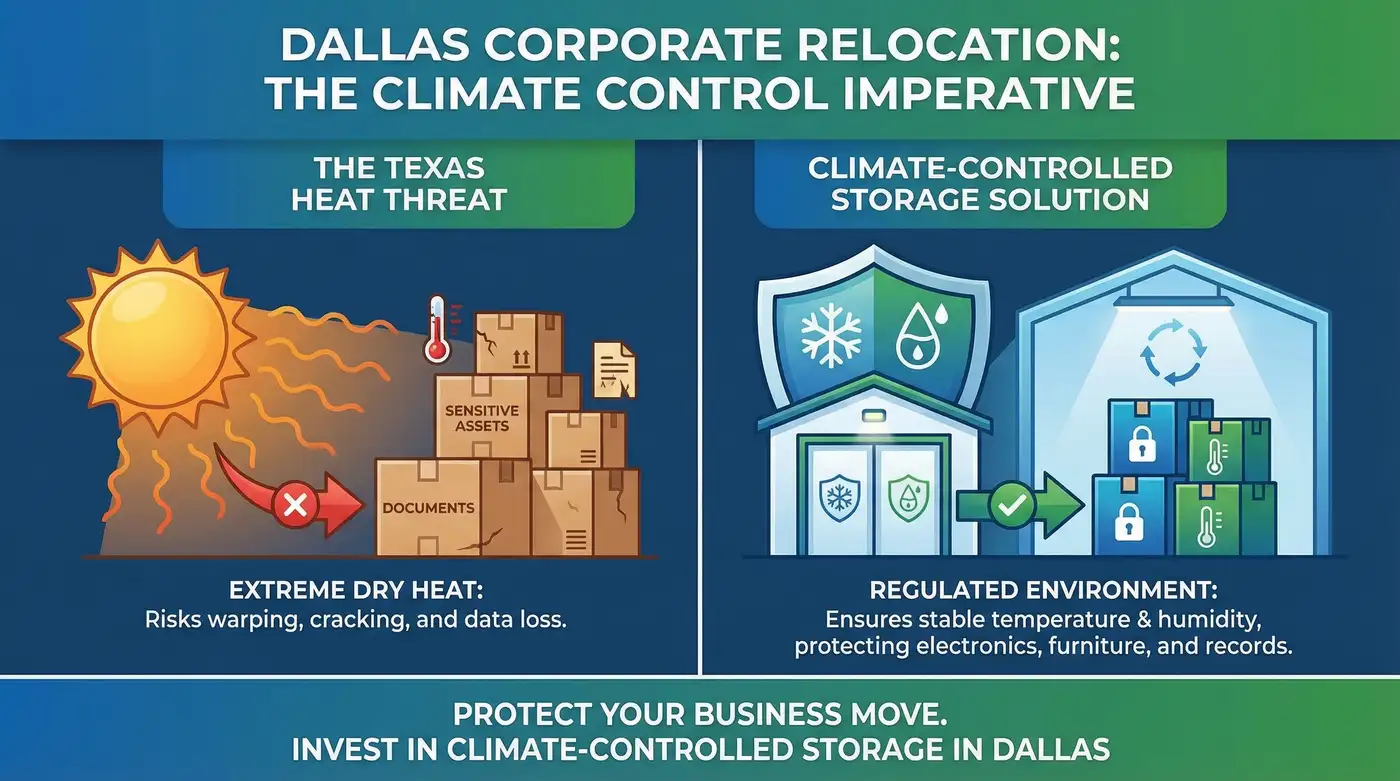
Do You Need Climate-Controlled Storage in Dallas? Why Transplants Are Searching +900%
Searches for "climate-controlled storage Dallas" have surged over 900% as corporate transplants from Goldman Sachs, Toyota, Caterpillar, and other relocating companies discover that Texas climate extremes can destroy belongings they never worried about in New York, Los Angeles, or Chicago. This guide explains Dallas's unique threat profile — which is fundamentally different from Houston's — and how to verify a facility's climate claims before signing.
Three Terms the Industry Uses — Only One Protects You
Storage facilities use these terms interchangeably in marketing, but they mean very different things. Understanding the difference can save you thousands in damage.
| Term | What It Means | Temperature | Humidity |
|---|---|---|---|
| Climate-Controlled | Full HVAC with both heating/cooling AND dehumidification | 55-85°F year-round | 30-50% regulated |
| Temperature-Controlled | Heating and cooling only, no humidity management | 55-85°F | Not regulated |
| Heated & Cooled | Building has HVAC but individual units may not get direct airflow | Varies widely | Not regulated |
Bottom line: In Dallas, you want full climate-controlled storage that includes both temperature regulation AND humidity management, with verified heating for winter months.
Dallas's Threat Profile: Dry Heat Damage
Dallas summers regularly exceed 100°F, and the interior of uninsulated metal-sided storage units can reach 120-130°F. Unlike Houston's humid heat, Dallas heat is DRY — and that creates a fundamentally different damage profile.
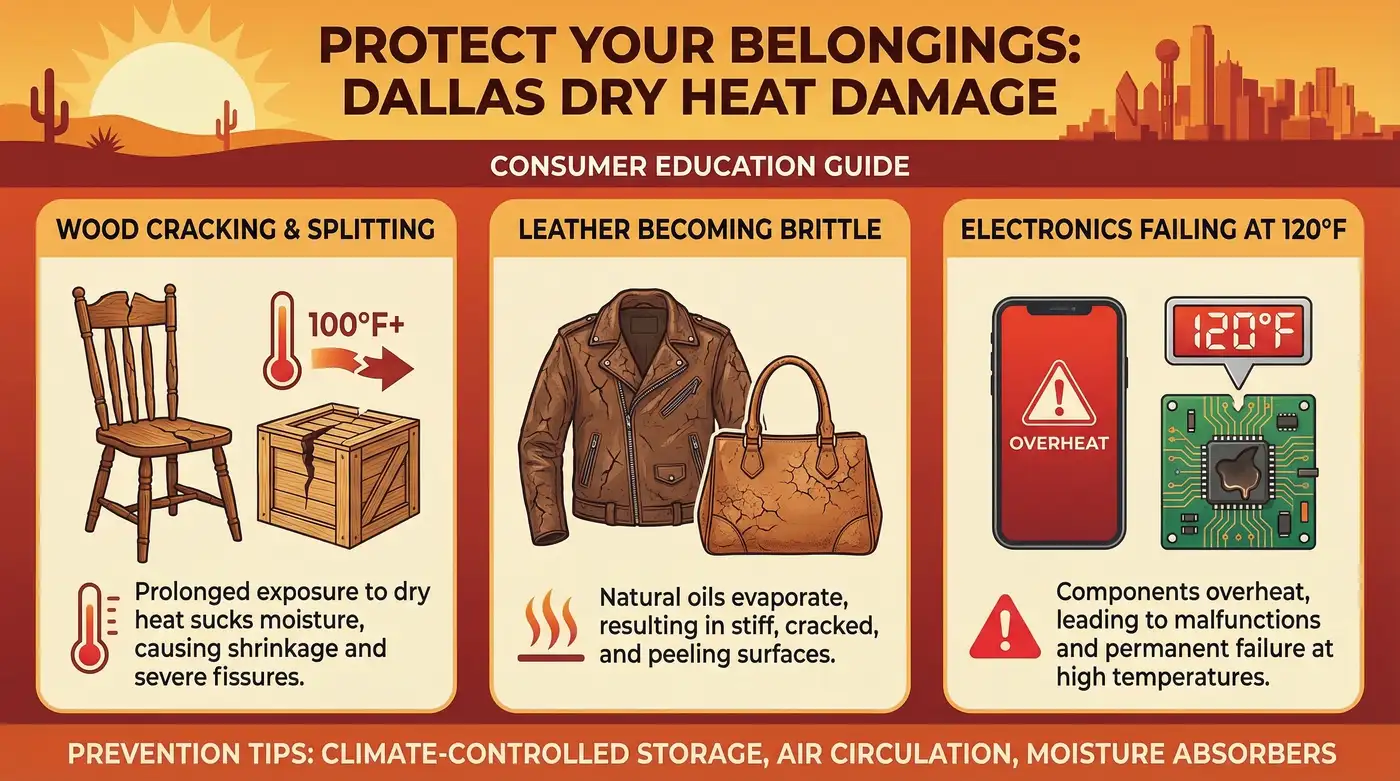
Dallas: DRY Heat Damage
- ● Wood furniture cracks and splits as moisture evaporates from grain
- ● Leather dries out, becomes brittle, cracks irreversibly
- ● Vinyl records warp at 100°F+
- ● Candles and cosmetics melt at 130°F
- ● Electronics: solder joints weaken, lithium batteries swell above 113°F
Houston: HUMID Heat Damage
- ● Wood furniture warps and swells as it absorbs moisture
- ● Mold and mildew growth on fabric, leather, paper
- ● Rust forms on metal tools and appliances
- ● Photographs and documents stick together
- ● Musty odor permanently embeds in upholstery
Winter Ice Storm Risk: The Threat Houston Does Not Have
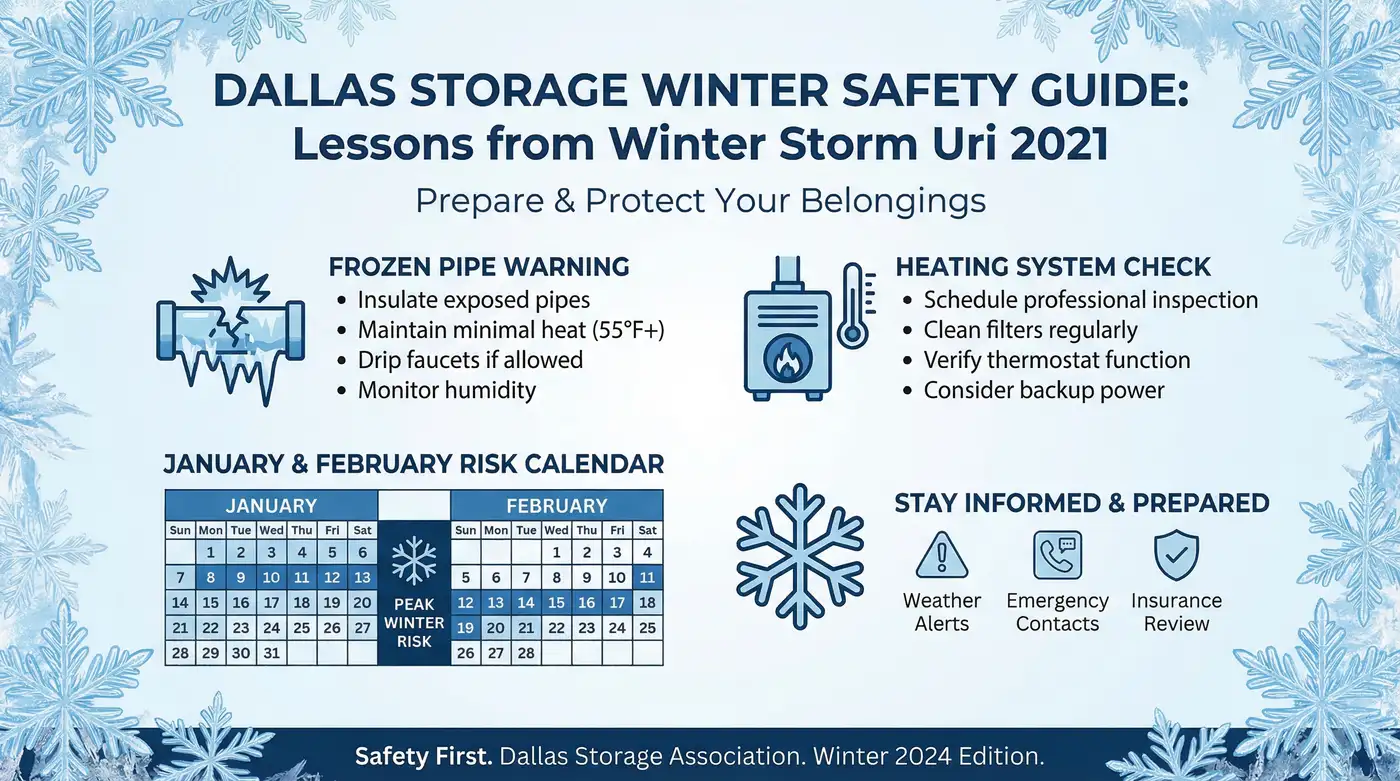
Dallas has a winter threat that Houston rarely faces: ice storms that drop temperatures to single digits. During Winter Storm Uri in February 2021, Dallas temperatures fell below 10°F for multiple days. Standard storage units became freezers.
What Freezing Temps Destroy in Storage
- ● Wine and spirits: Corks contract, seals break, liquid freezes and expands — bottles crack or contents are ruined
- ● Electronics: LCD screens crack at sub-freezing temperatures, condensation forms on circuits during thaw cycles
- ● Musical instruments: Wood contracts, glue joints fail, strings snap from tension changes
- ● Pipes inside facility: Frozen pipes burst, flooding units on lower floors — this happened at multiple DFW facilities during Uri
- ● Paint and chemicals: Latex paint separates permanently when frozen; many chemicals become unusable
Dallas renters need a facility with a HEATING system — not just cooling. Ask specifically about winter heating capability before signing.
Item-by-Item Dallas Risk Assessment
Risk levels reflect Dallas's dry heat and ice storm profile — different from Houston's humidity-driven risks.
| Item Category | Dallas Risk (Standard Unit) | Primary Dallas Threat | Climate Control Needed? |
|---|---|---|---|
| Wood Furniture | MEDIUM | Cracking/splitting from moisture loss | Yes |
| Electronics | CRITICAL | Battery swell (heat), LCD crack (freeze) | Absolutely |
| Clothing & Textiles | LOW-MEDIUM | Fading, dust, minor pest risk | Recommended |
| Mattresses | MEDIUM | Foam degradation from heat cycling | Yes |
| Documents & Photos | HIGH | Paper becomes brittle, photos fade | Absolutely |
| Leather Goods | HIGH | Drying, cracking, irreversible damage | Absolutely |
| Wine & Spirits | CRITICAL | Heat spoilage + freeze expansion | Absolutely |
| Metal Tools | LOW | Minimal — resistant to temperature swings | No |
| Musical Instruments | CRITICAL | Wood cracking, glue failure, string snap | Absolutely |
Why the +900% Search Surge?
The explosion in climate-controlled storage searches in Dallas is driven by several converging trends.
- ● Corporate relocations: Goldman Sachs, Toyota, AT&T, Caterpillar, Charles Schwab, and PGA of America have all moved operations to DFW, bringing tens of thousands of employees who need storage during their transition
- ● New-to-Texas discovery: Transplants from coastal cities are learning for the first time that Texas heat and cold can damage items they previously stored without concern in milder climates
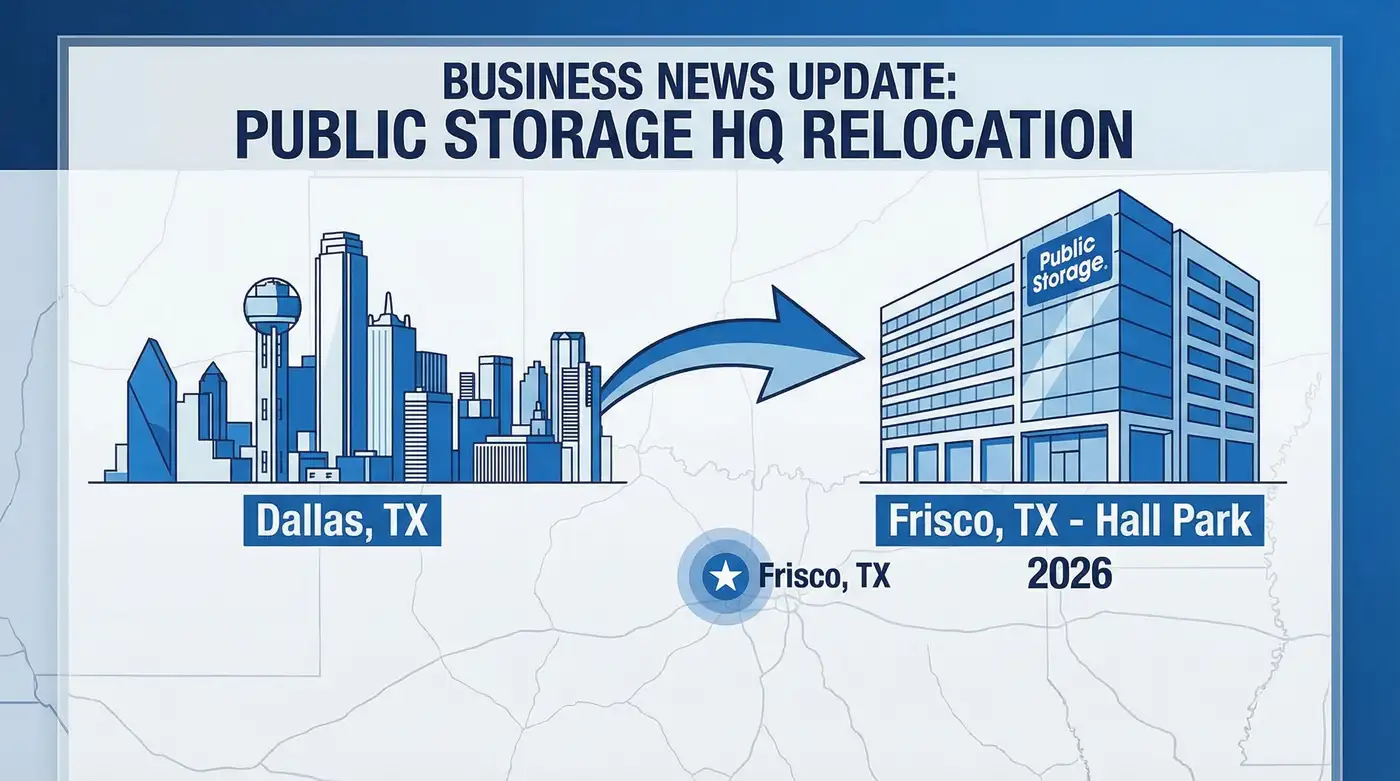
- ● Public Storage HQ relocation: Public Storage moved its national headquarters from Glendale, CA to Frisco, TX — generating significant media coverage that raised awareness of the storage market in DFW
- ● Post-Uri awareness: Winter Storm Uri in 2021 educated Dallas residents about freeze risk and drove long-term demand for climate-protected storage
When Standard Storage IS Acceptable
Not everything needs climate control. Standard units are fine for these items:
- ✓ Metal tools, lawn equipment, and hardware
- ✓ Outdoor furniture designed for weather exposure (aluminum, resin, marine-grade)
- ✓ Holiday decorations in sealed plastic bins
- ✓ Concrete, stone, and ceramic items
- ✓ Vehicles (standard covered or indoor parking — climate control optional)
How to Verify a Facility's Climate Control Claims
Many facilities market "climate-controlled" units that are actually just enclosed hallways with a single shared HVAC unit. Use these five steps to verify real climate control before you sign.
Ask for the HVAC spec sheet
Request the make, model, and capacity of the climate system. Legitimate facilities will provide this information. If they cannot, walk away.
Check the thermostat yourself
Walk to the hallway thermostat during your tour. It should read between 55-85°F. If the hallway feels the same temperature as outside, the system is not running or undersized.
Inspect the unit walls and ceiling
Climate-controlled units should have insulated interior walls (drywall or insulated panels), not bare metal. If you see corrugated metal walls inside a "climate-controlled" unit, it is actually just a standard unit with shared hallway air.
Ask about the heating system specifically
Dallas needs HEATING for winter, not just cooling. Ask: "Does this building have a heating system that activates in winter?" Many Dallas facilities only have cooling and market it as "climate-controlled." Without heating, your unit could drop to single digits during an ice storm.
Request the temperature log or monitoring data
Premium facilities track temperature and humidity continuously. Ask to see data from the previous summer and winter. If they do not monitor conditions, they cannot guarantee climate control.
Dallas Climate-Controlled Storage FAQs
Frequently Asked Questions
Why are searches for climate-controlled storage in Dallas up 900%?
The surge is driven by corporate relocations bringing thousands of new residents from milder climates. Employees transferring from Goldman Sachs (NYC), Toyota (LA), Caterpillar (Chicago), and other companies are discovering that Texas climate extremes can destroy belongings they never worried about before. Public Storage moving its national HQ to Frisco has also raised general awareness of storage needs in the DFW market.
Is Dallas dry heat or humid heat, and why does it matter for storage?
Dallas has DRY heat — fundamentally different from Houston's humid heat. In Dallas, extreme dry heat causes wood to lose moisture, leading to cracking, splitting, and warping of furniture joints. Leather dries out and cracks. Houston's humidity causes the opposite problem: wood absorbs moisture and swells, creating mold and mildew. Both are destructive, but they require different protection approaches. Dallas storage needs focus on preventing moisture loss and temperature extremes.
Can an ice storm damage items in a standard storage unit?
Yes. During Winter Storm Uri in February 2021, temperatures in Dallas fell to single digits for days. Standard metal-sided storage units dropped to near-freezing or below. Frozen pipes burst inside some facilities. Wine collections were destroyed, electronics with LCD screens cracked, and anything containing liquid froze and expanded. If your storage facility does not have a heating system, your items are at risk every winter.
What temperature range should a climate-controlled unit maintain?
A properly climate-controlled unit in Dallas should maintain 55-85°F year-round with humidity levels between 30-50%. During summer, this means active cooling when outdoor temps exceed 100°F. During winter, this means active heating when temps drop below 40°F. Ask the facility for their target range in writing — if they cannot specify a range, their "climate control" may just be ventilation.
Is "temperature-controlled" the same as "climate-controlled"?
No. The storage industry uses three terms with different meanings: "Climate-controlled" includes both temperature and humidity regulation. "Temperature-controlled" manages heat and cold but not humidity. "Heated and cooled" often means the building has HVAC but individual units may not receive direct airflow. In Dallas, you want full climate control with both temperature AND humidity management, plus verified heating for winter.
When is standard storage acceptable in Dallas?
Standard (non-climate-controlled) storage is acceptable for items that are resistant to temperature extremes: metal tools and equipment, outdoor furniture designed for weather exposure, concrete or stone items, sealed canned goods, and vehicles. If you are storing only garage overflow, lawn equipment, or holiday decorations in sealed plastic bins, standard storage may be sufficient. However, anything with wood, fabric, leather, paper, or electronics should be in climate-controlled storage.
Related Dallas Storage Guides
Pricing Guide
Complete 2026 pricing for every size and type — standard vs climate-controlled comparison.
Neighborhood Guide
Storage options by DFW area with HOA rules, facility ratings, and availability.
Move-In Checklist
What to ask and check before signing — including ice storm preparation questions.
Sources & References (4)
- [1]Self Storage Association— Industry standards and unit sizing
- [2]Better Business Bureau— Business ratings and complaint history
- [3]NOAA Climate Data— Temperature and humidity data for climate-controlled storage guidance
- [4]Texas Secretary of State— Business entity verification
Reviewed by RelocateMeTX Editorial Team
Content verified March 2026. Relocation information on this page has been reviewed for accuracy against primary sources — see how we verify our data. This guide is for informational purposes only and does not constitute professional financial, legal, or medical advice.