The short version: Dallas is a city you explore by neighborhood: live music and murals in Deep Ellum, brunch and boutiques in Bishop Arts, cocktails in Uptown, and the free Dallas Museum of Art and Klyde Warren Park downtown. This guide covers things to do, nightlife, family outings, getting around, safety and the neighborhoods, then what living here costs: a median home near $410,000, zero state income tax, and a 1.58–1.74% effective property tax rate. From June through September, when average highs run 93–97°F, plan outdoor time before 9 AM. Quick picks: Parliament in Uptown for cocktails, the Perot Museum and the Dallas Zoo with kids, Uptown for young professionals and Frisco for suburban schools.
R
RelocateMeTX Editorial Team 25 min read 
Updated September 2026 · 27.7M Visitors in 2024
Dallas City Guide: What to Know Before You Visit or Move in 2026
Dallas city guide to neighborhoods, restaurants, nightlife and museums, plus the cost-of-living, safety and weather numbers relocators actually need.
Updated
FAD
Presented by
Furnished Apartments DallasMove-in ready furnished apartments across Greater Dallas-Fort Worth
Sponsored: RelocateMeTX is affiliated with F.A.D Furnished Apartments.
Explore Dallas
12 topics covering everything you need to know, whether you're visiting or moving here, written by the team that helps people relocate to Dallas, not a tourist brochure. Eleven are answered right on this page; live weather has its own page.
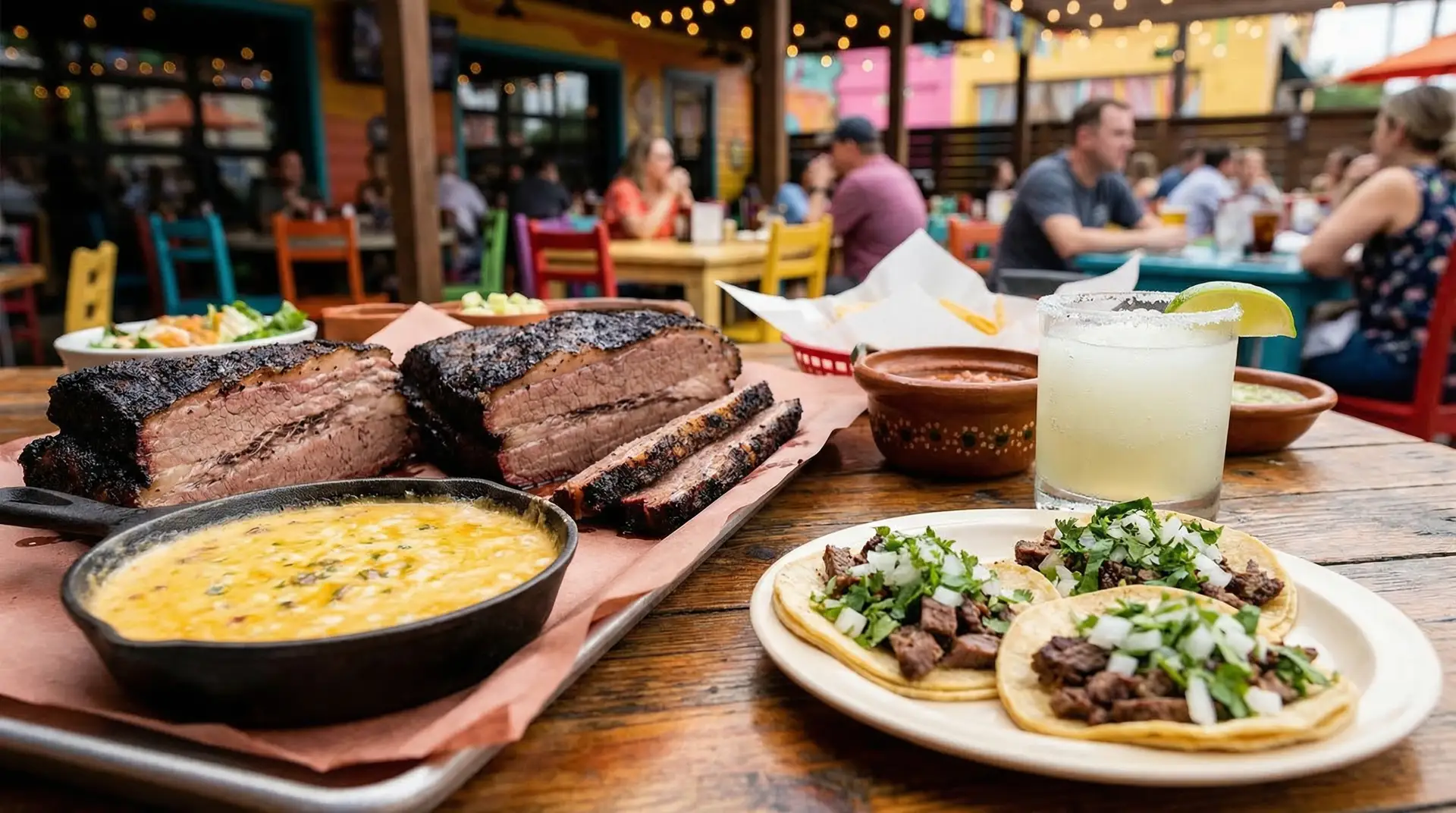
🍜 Food
Food & Dining
BBQ brisket, Tex-Mex, 2 Michelin-starred restaurants, frozen margarita birthplace, and where locals actually eat.
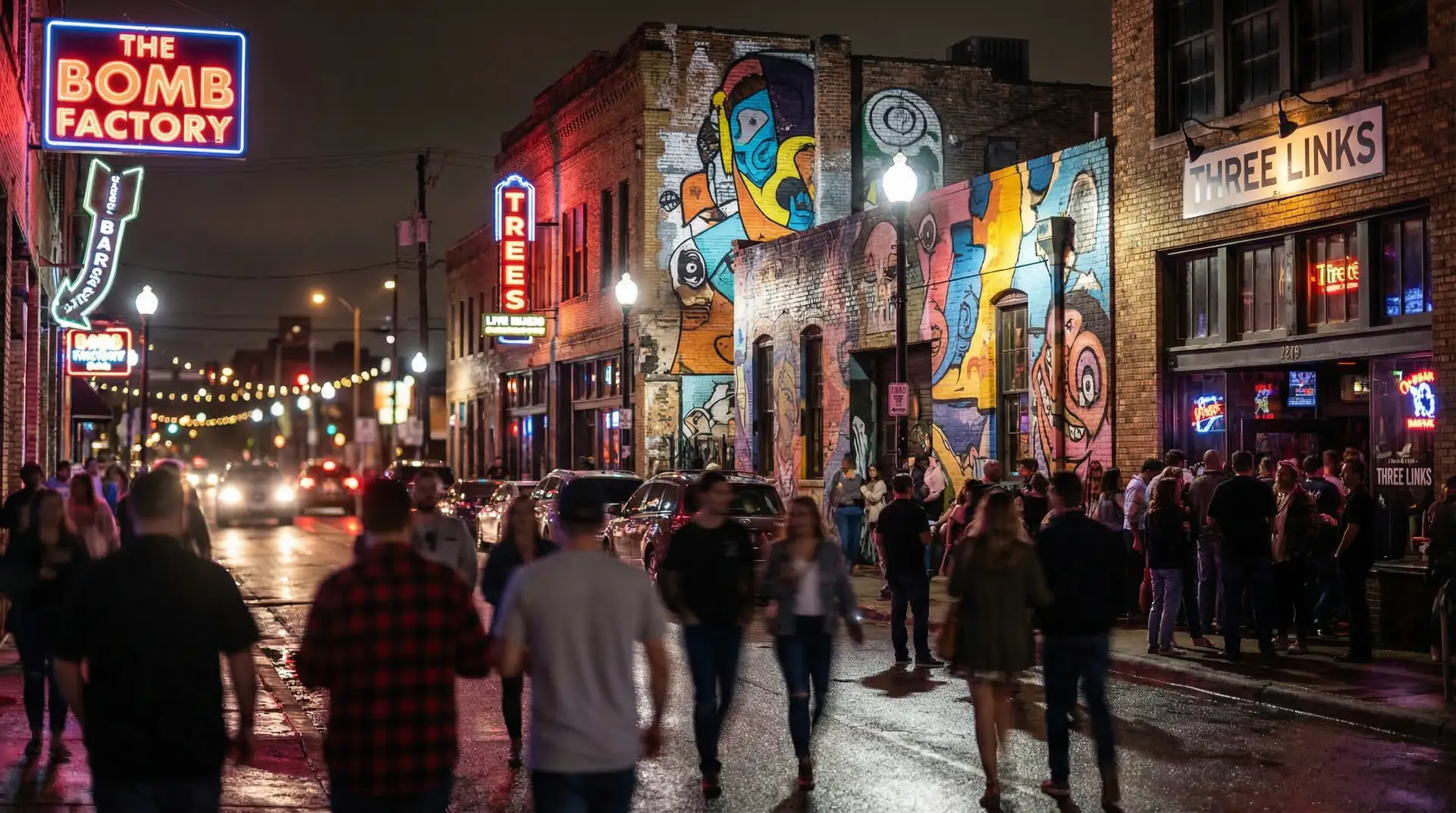
🍸 Nightlife
Nightlife & Bars
Deep Ellum live music, Uptown cocktail bars, Knox-Henderson scene, and the Deep Ellum rideshare geofencing rules.
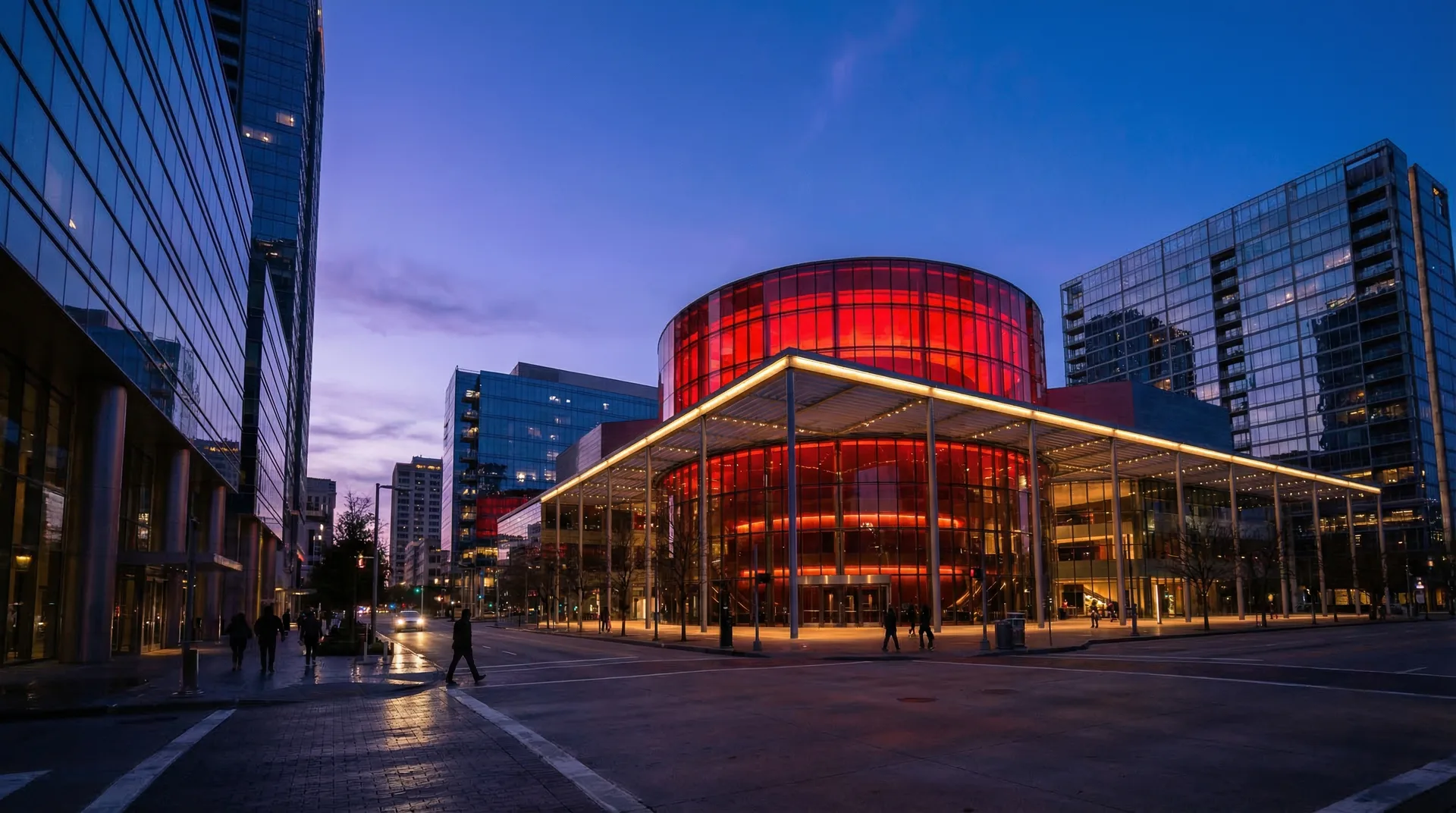
🎨 Arts
Arts & Culture
Largest urban arts district in the U.S.: 19 city blocks of museums, performance halls, and public art.
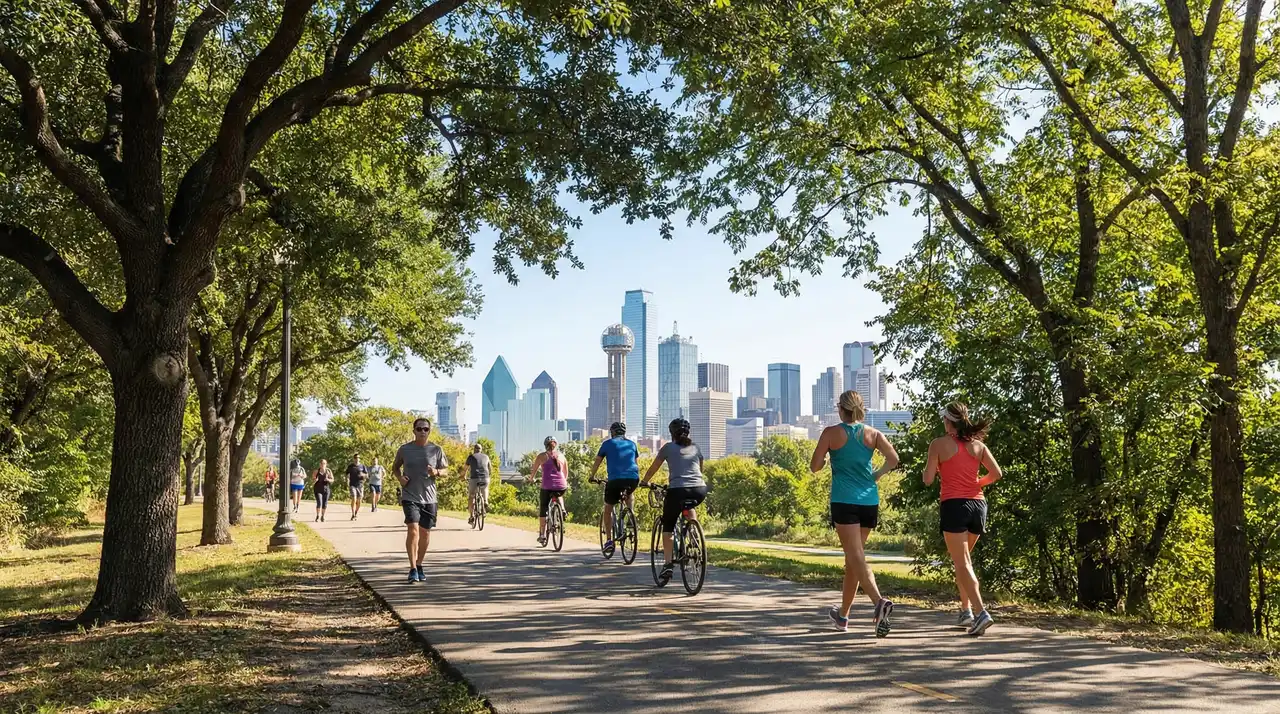
🌿 Outdoors
Outdoor Recreation
Katy Trail (3.5 miles, 2M+ visitors/year), White Rock Lake, Cedar Ridge, and surviving Texas summers outdoors.
🏟️ Sports
Pro Sports
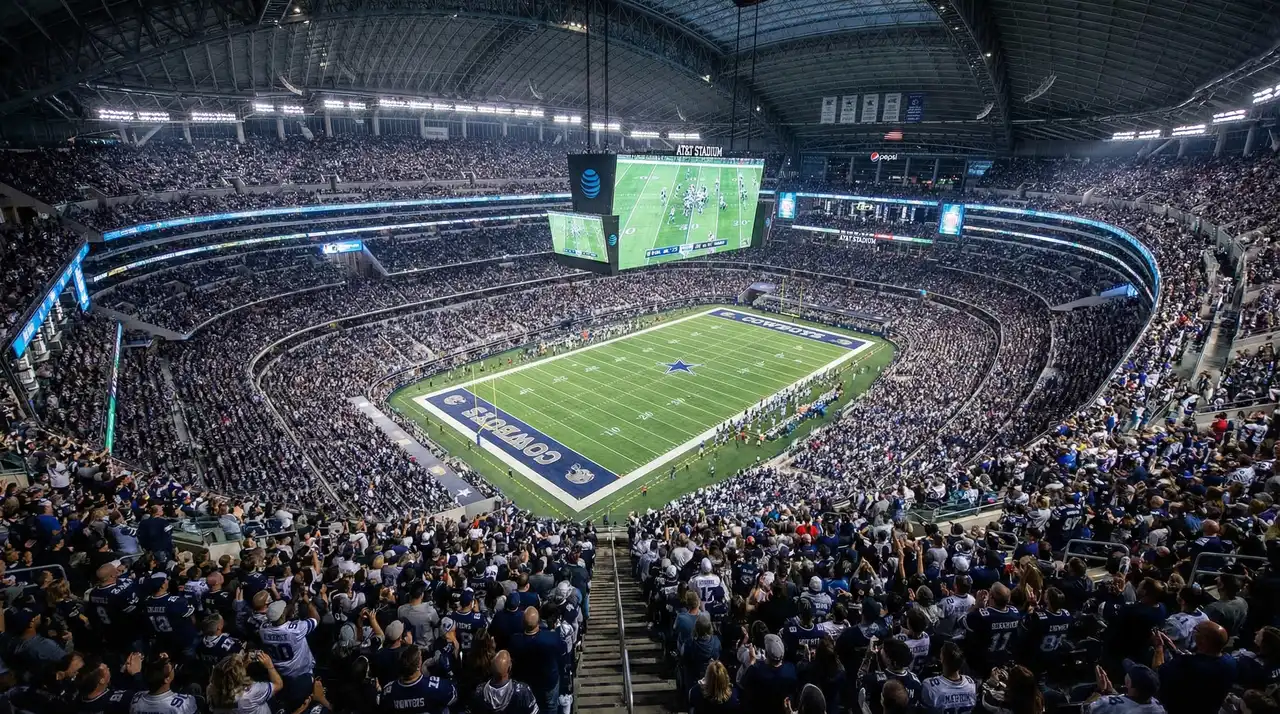
Cowboys, Mavericks, Stars, Rangers, FC Dallas, and the 9 FIFA World Cup matches Dallas hosted in 2026.
🛍️ Shopping
Shopping
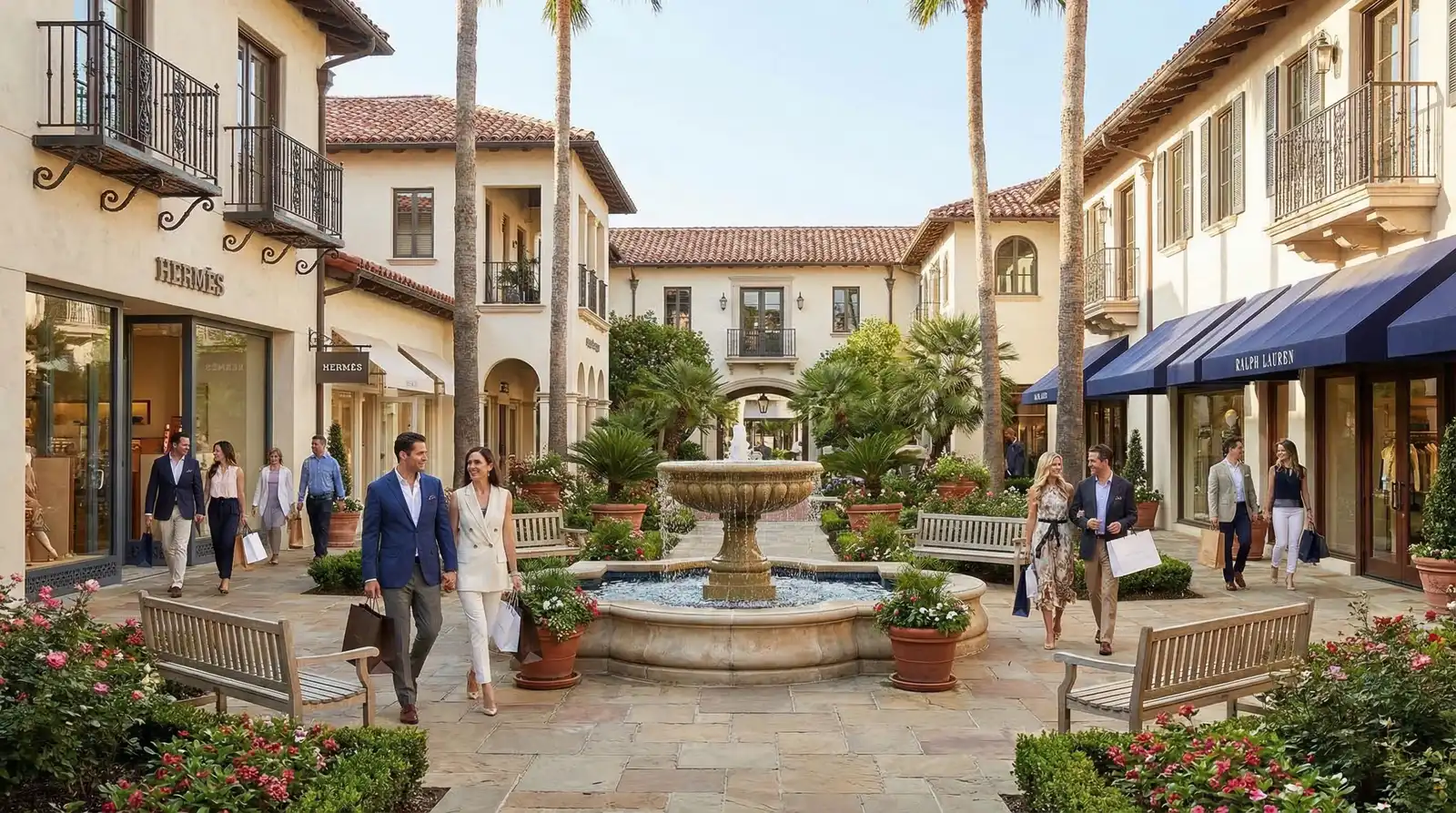
Highland Park Village (first planned shopping center in America), NorthPark, Design District, Bishop Arts boutiques.
🎪 Events
Events & Festivals
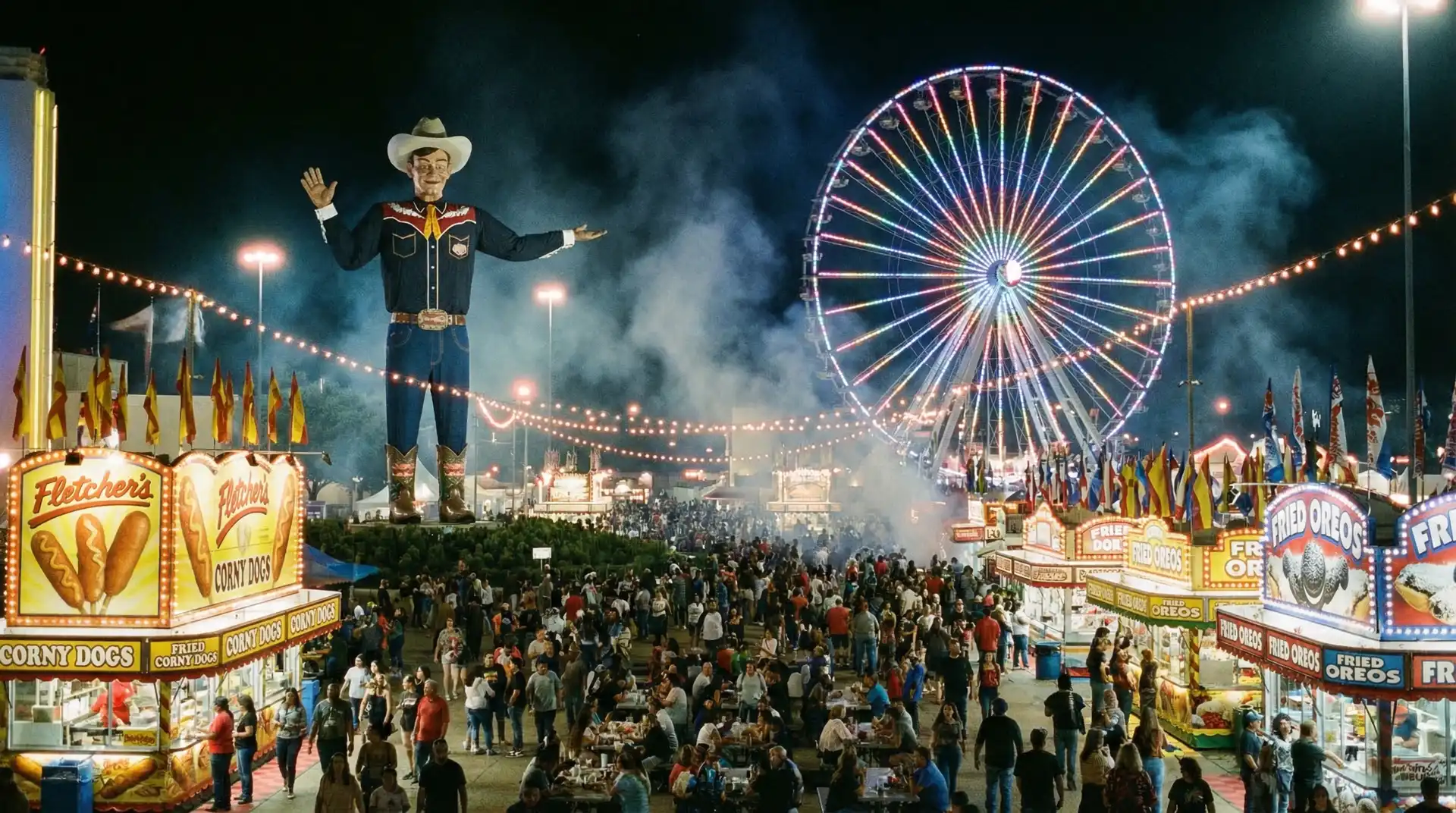
State Fair of Texas (Sept 25–Oct 18, 2026), Dallas Blooms, Deep Ellum Arts Festival, and a packed calendar.
👨👩👧 Family
Family & Kids
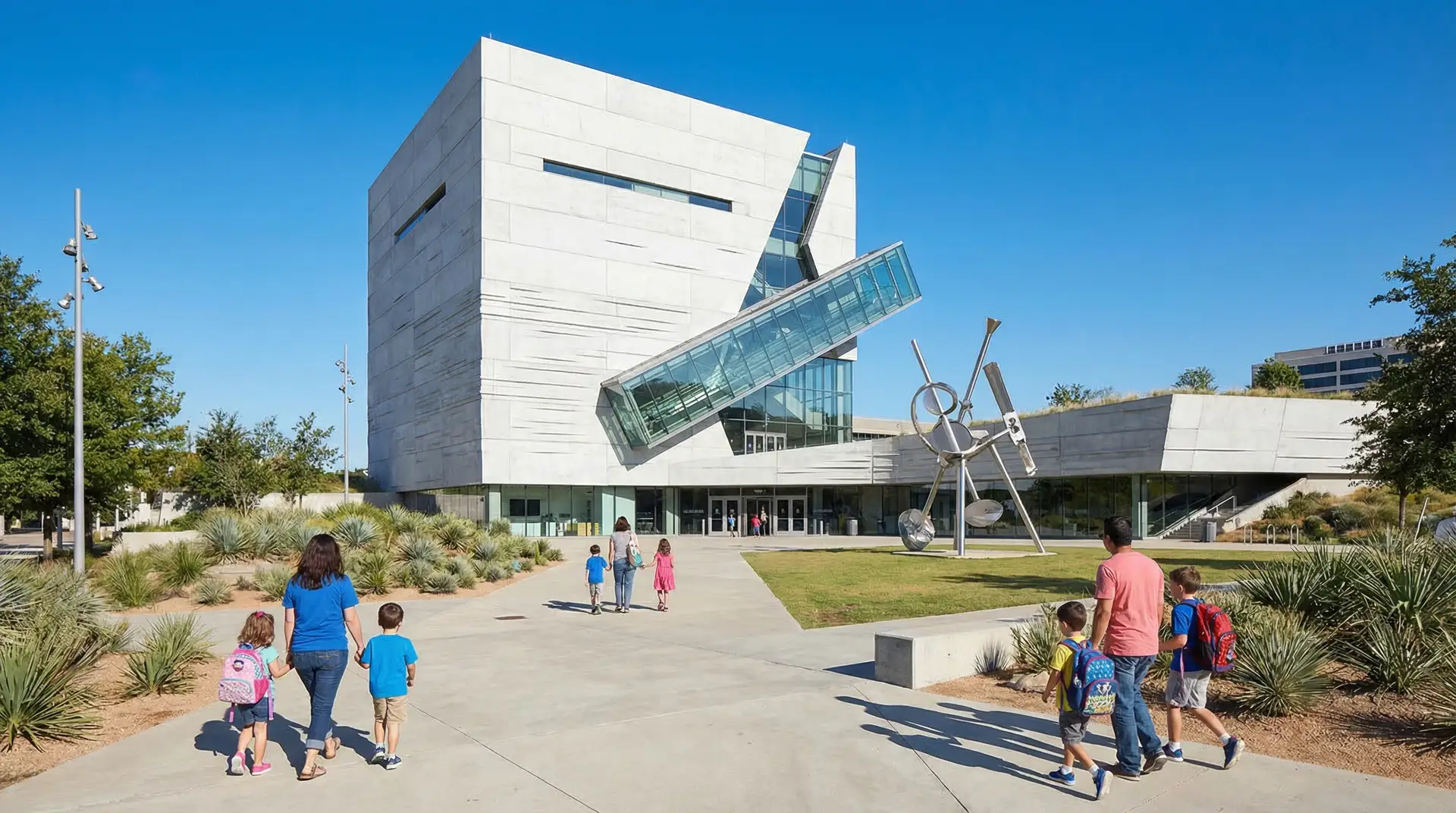
Perot Museum, Dallas Zoo, Dallas Arboretum, splash pads, and why DFW suburbs consistently rank safest in America.
💎 Gems
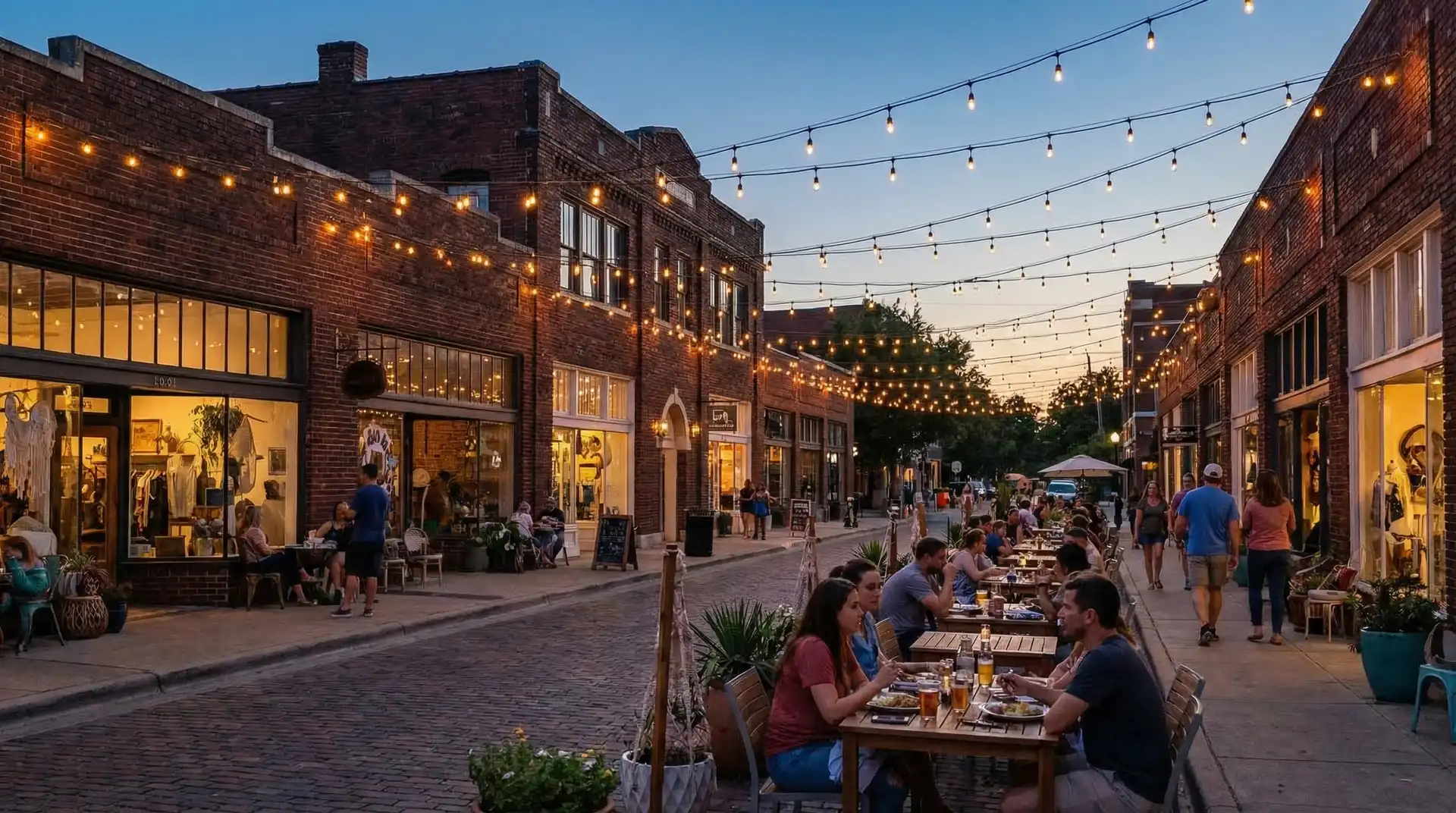
Hidden Gems
Bishop Arts secrets, Trinity Groves restaurant incubator, White Rock Lake trails, and smaller spots worth the detour.
🌡️ Weather
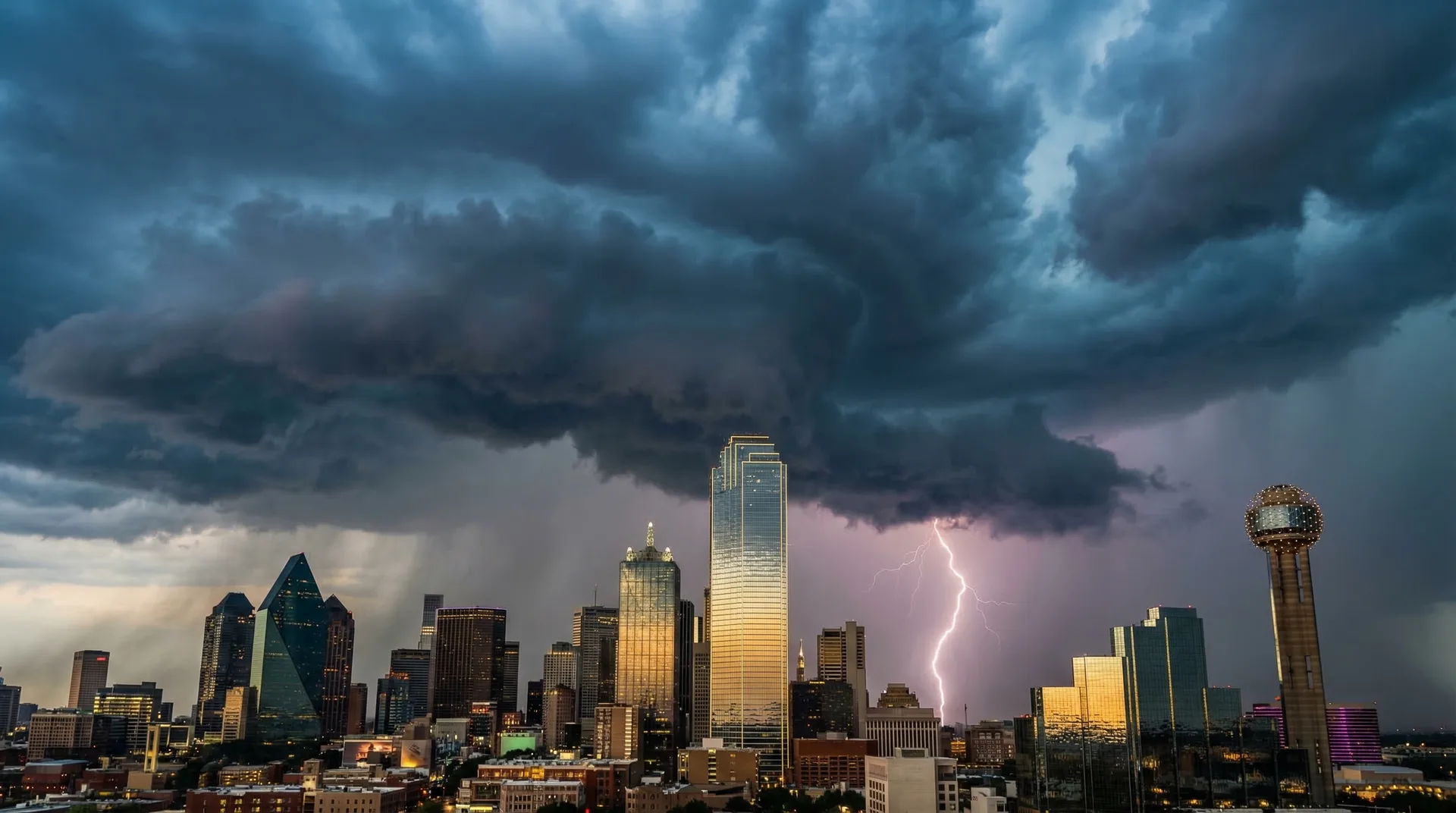
Weather & Climate
The honest truth about 100°F summers, spring tornado season, and why October is the greatest month in Texas.
🌤️ Live
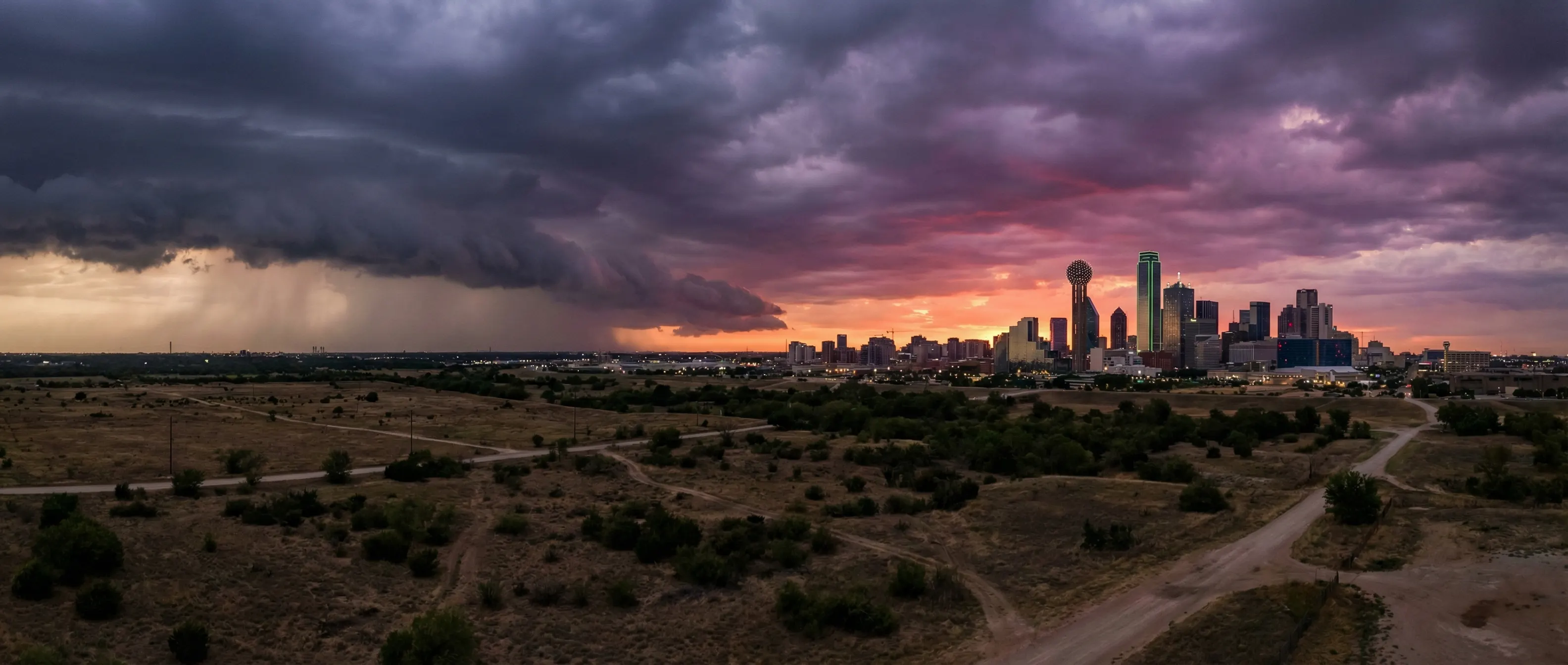
Live Weather Forecast
Current conditions, 7-day forecast, hourly data, live from the National Weather Service.
🚗 Trips
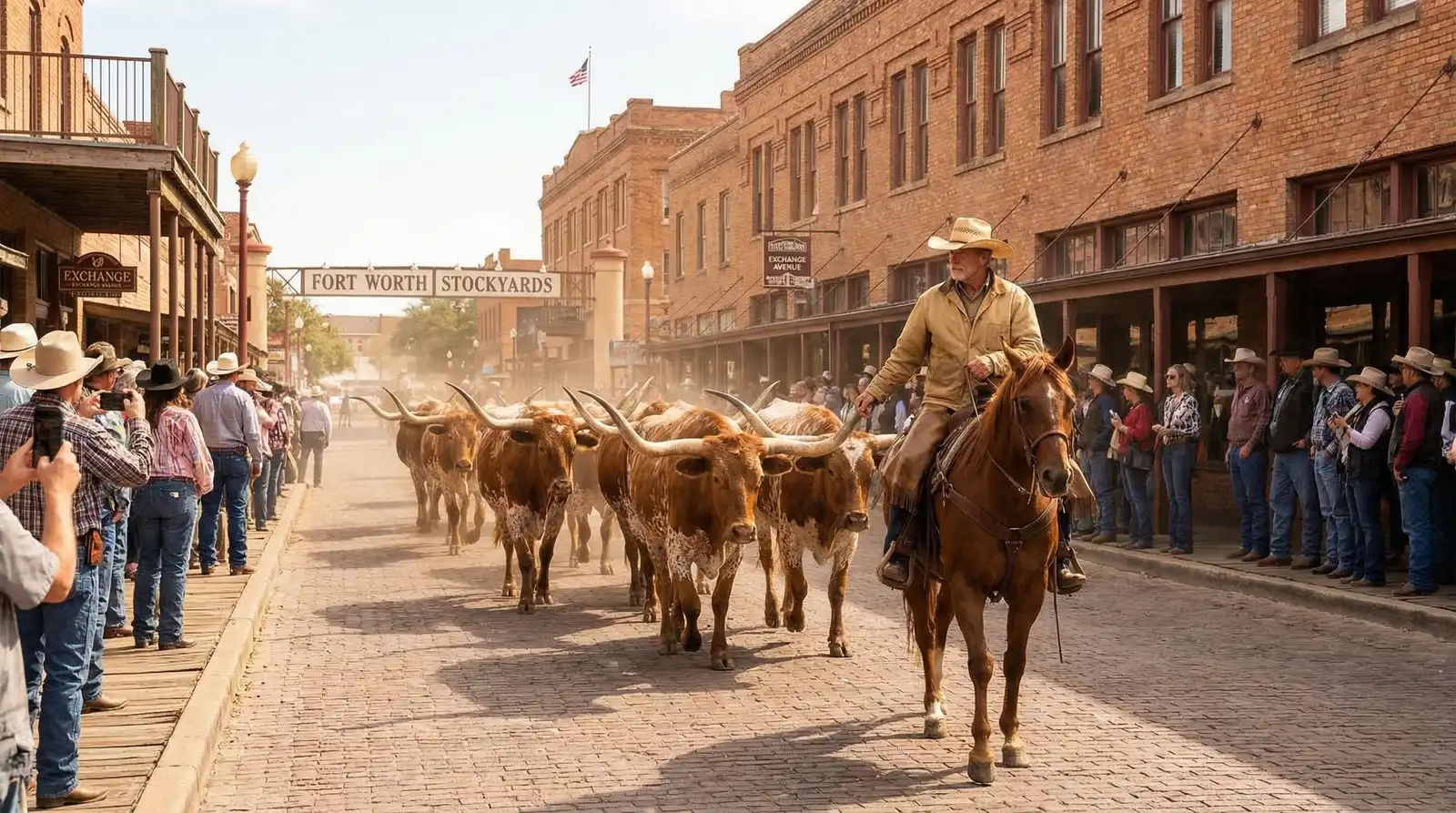
Day Trips
Fort Worth Stockyards (45 min), Oklahoma border drives, Lake Texoma, all within a tank of gas.
👥
8.3M+
Metro Population
Star
27.7M
Visitors in 2024
🌐
9
World Cup Matches Hosted (2026)
💲
0%
State Income Tax
Things to Do in Dallas
Nine topics, each condensed into the names, dates, prices and distances a visitor or a new resident actually uses. Nightlife and family outings get their own sections below.
Food & dining
Dallas holds 2 Michelin Stars as of 2025: Tatsu, a 10-seat omakase in Deep Ellum, and Mamani, French-Italian in Uptown. Bib Gourmand picks include Lucia, Gemma, Ngon Vietnamese Kitchen, Một Hai Ba, and Cattleack Barbeque. For BBQ, locals argue Pecan Lodge (Deep Ellum) versus Hutchins (McKinney), with Cattleack in Farmers Branch as the pilgrimage pick. Tex-Mex means Mia's brisket taco, unchanged since 1981, and El Fenix, founded 1918; the frozen margarita machine was invented at Mariano's, in the Old Town center on Greenville Avenue, in 1971, and the original now sits in the Smithsonian. Eat by neighborhood: Deep Ellum for variety, Bishop Arts for brunch, Knox-Henderson for date nights, Oak Cliff for authentic Mexican and soul food.
Museums and arts in Dallas
The Dallas Arts District is the largest contiguous urban arts district in the U.S.: 19 city blocks holding the Dallas Museum of Art (free general admission, closed Mondays and Tuesdays, 24,000+ works, the 9th most-visited art museum in the country), the Nasher Sculpture Center ($10 adults, Renzo Piano building), the I.M. Pei-designed Meyerson Symphony Center, and the Winspear Opera House. Deep Ellum is the counterpoint — 70+ street murals plus the free Deep Ellum Arts Festival each April with 200+ artists. Also free: the Crow Museum of Asian Art, the African American Museum at Fair Park, and Dallas Contemporary in the Design District. Most venues close on Mondays.
Outdoor recreation
The Katy Trail packs 2 million+ annual visitors onto 3.5 miles of rails-to-trails greenway running from near American Airlines Center to Mockingbird Station. White Rock Lake offers a 9.3-mile loop around a 1,015-acre reservoir with sailing, paddleboarding, and 250+ bird species. Real hiking lives at Cedar Ridge Preserve (633 acres, 9 miles of trails) and Arbor Hills Nature Preserve in Plano. Klyde Warren Park, 5.4 acres built over Woodall Rodgers Freeway, functions as the city's town square, and the Trinity River system links 50+ miles of paths. The summer rule: be out by 7 AM from June through September.
Pro sports
DFW fields six franchises: the Cowboys (AT&T Stadium, Arlington), the Mavericks and Stars (sharing American Airlines Center, reachable on DART), the Rangers (Globe Life Field, retractable roof, 2023 World Series champions), FC Dallas (Toyota Stadium in Frisco, 20,500 seats), and the Dallas Wings (WNBA, College Park Center). Rangers tickets ($15–$80) are the best value in the metro. Note that no DART rail reaches Arlington, so plan ride-share for Cowboys and Rangers games. In 2026, AT&T Stadium hosted 9 World Cup matches, the most of any North American city, including the July 14 semi-final.
Shopping
Highland Park Village (1931) is the first planned shopping center in the United States, now anchored by Chanel and Hermès among roughly 60 retailers. NorthPark Center counters with 235+ stores, a $75 million sculpture collection, and DART access at Park Lane. West Village in Uptown is the walkable option, Legacy West in Plano is the suburban luxury district, and Bishop Arts keeps it all-local with zero chains. For outlets, Allen Premium Outlets (100 stores, 30 miles north) and Grapevine Mills (200+ stores) cover the bases.
Events & festivals
The State Fair of Texas runs September 25 to October 18, 2026 at Fair Park: 24 days, 2.5 million visitors, Big Tex, and Fletcher's Corny Dogs, with the DART Green Line the smart way in. Dallas Blooms fills the Arboretum with 500,000+ spring bulbs from February into March, peaking around the third week of March ($15). The Deep Ellum Arts Festival, the last weekend of April, brings 200+ juried artists for free. During the 2026 World Cup, the free FIFA Fan Festival ran at Fair Park from June 11 to July 19, with capacity for 35,000. Lights All Night closes the year on NYE weekend.
Hidden gems
Start with Cidercade in the Design District, an arcade bar with nearly 200 games on free play, and the Crow Museum of Asian Art's second campus at UT Dallas in Richardson, free and nearly always empty. The Frontiers of Flight Museum at Love Field ($20 adults) holds an actual Apollo 7 command module. Trinity Groves pairs a restaurant incubator with a rooftop view of the Margaret Hunt Hill Bridge. Locals-only food: the 24-hour taco trucks on Harry Hines Boulevard, Kalachandji's vegetarian buffet in East Dallas (about $15), and El Come Taco's breakfast tacos on North Fitzhugh. White Rock Lake before 7 AM is the city's quietest beautiful hour.
Weather & climate
June through September average highs run 93–97°F, with July and August both averaging 97°F and multi-day stretches above 100°F every year; the real outdoor window is 5:30 to 9:00 AM. The payoff is 234 sunny days annually, plus an October (65–80°F) that locals treat as sacred. Winters are mild on paper (January averages a 57°F high and 37°F low), but ice storms hit 2–4 times per winter and paralyze a city with no ice-removal infrastructure; the February 2021 storm dropped DFW Airport to -2°F, its coldest reading in 72 years. Spring (March–June) is tornado season, with DFW averaging 6–8 tornado warnings per year: a watch means conditions are favorable, a warning means take cover. Annual rainfall is about 37 inches.
Day trips from Dallas
Fort Worth Stockyards, 45 minutes west on I-30, runs longhorn cattle drives twice daily (11:30 AM and 4 PM) alongside Cowtown Coliseum and Billy Bob's Texas; pair it with the Kimbell Art Museum's free permanent collection. Waco (1.5 hours) means Magnolia Market at the Silos and the Dr Pepper Museum, where the soda was invented in 1885. Dinosaur Valley State Park in Glen Rose (1.5 hours, $7 per person) has real dinosaur tracks in the Paluxy River bed. Lake Texoma sits 80 miles north with 93,000 acres and world-renowned striped bass fishing, and Palo Duro Canyon, the 800-foot-deep "Grand Canyon of Texas," is 3 hours west.
Dallas Nightlife and Bars
Dallas nights start late. Bars see their heaviest traffic from 11 PM to 1:30 AM, Texas state law sets last call at 2 AM, and the standard local sequence is dinner from 7–9 PM, a low-key bar until about 10:30 PM, then the main venue around 11 PM. Nightlife spreads across five distinct zones rather than one district — each with its own character, crowd, and price point.
| Zone | Best For | Anchor Venues |
|---|---|---|
| Deep Ellum | Live music — 70+ venues across Elm, Main, Commerce, Gaston, and Malcolm X; peak Thursday–Saturday | The Bomb Factory (4,000 cap), Trees (850), Club Dada (300), Double Wide (dive, on Commerce at the Exposition Park edge) |
| Uptown | Craft cocktails, dates, post-work drinks; $14–$18 per cocktail at the better spots | Parliament (cocktail bar in State Thomas), The Rustic (outdoor concert venue), Katy Trail Ice House (beer garden on the trail), Happiest Hour (rooftop, next door in the Harwood District) |
| Knox-Henderson | Low-key neighborhood bars; best for groups of 2–4 | The Old Monk (Irish pub, 20+ years on Henderson), Barcadia (arcade bar) |
| Oak Lawn | LGBTQ+ scene on Cedar Springs Road; packed Friday–Saturday, quieter weeknights | JR's Bar & Grill (open since 1979), Station 4 (dance club), Rose Room (drag) |
| Lower Greenville | Locals' bar-hop along Greenville Avenue; 30-something crowd | The Granada Theater (concert venue), Truck Yard (beer garden off Greenville), The Old Crow (dive) |
Before your first night out
- Deep Ellum Flow Zones: from 9 PM Thursday to 3 AM Sunday, Uber and Lyft cannot pick up on Elm, Main, or Commerce Streets. Pickups route to five designated Flow Zones within 2–5 blocks; pin them before you go (the GoPass app and Google Maps show the locations).
- Cover charges at live music venues run $5–$20, so bring a small amount of cash.
- Parking in Deep Ellum is limited and expensive; rideshare in, and request the ride home at 1:30–1:45 AM to beat post-last-call surge pricing.
- Wine over whiskey? Veritas (Uptown), Hive Wine + Kitchen (Lower Greenville), and the Texas steak-focused list at Knife (Preston Center) anchor a surprisingly strong wine scene.
Family-Friendly Things to Do in Dallas
Six of Texas's top 10 school districts are in DFW, and the metro's suburbs lead national safety rankings (see the safety section below). For day-to-day family life, four attractions carry most of the load; annual memberships at the paid ones typically pay for themselves within 2–3 visits.
| Destination | What You Get | Admission |
|---|---|---|
| Perot Museum of Nature & Science | 11 hands-on exhibition halls (paleontology, gems and minerals, engineering, human body) in a 180,000 sq ft Victory Park building; DART-accessible at Victory Station; timed entry recommended on weekends | $27 adults, $17 ages 2–12 |
| Dallas Zoo | Largest zoo in Texas at 106 acres in Oak Cliff; Wilds of Africa, giraffe feeding, and Zoo Lights (November–January) | From $18, varies by date |
| Dallas Arboretum | 66 acres on White Rock Lake; the 8-acre Rory Meyers Children's Adventure Garden; Dallas Blooms each spring (official site) | $21.95 Mon–Thu, $25.95 Fri–Sun, plus $15 parking |
| Klyde Warren Park | Family programming 7 days a week over Woodall Rodgers Freeway: seasonal splash pad, playground, food trucks, weekend events | Free |
School districts for families
School district drives neighborhood choice for most relocating families. The top tier: Highland Park ISD (Niche A+; requires living in University Park or Highland Park, homes $700K–$3M+), Carroll ISD (Southlake, homes $600K–$2M+), Lovejoy ISD (Lucas/Allen area), and Frisco ISD. Value picks with strong schools: Allen ($400K–$650K), McKinney ($380K–$600K), Flower Mound ($400K–$700K), and fast-growing Celina and Prosper at lower entry prices. Within Dallas ISD, magnet programs such as Booker T. Washington High School for the Performing Arts are nationally recognized. See our Dallas schools guide for full district rankings.
Practical rhythm for the first year: from June through September, plan outdoor time before 9 AM and lean on free city splash pads (Frisco runs three, plus the one at Kaleidoscope Park). Arbor Hills Nature Preserve in Plano is the go-to hike with kids, and the Children's Aquarium at Fair Park rounds out the core destination list.
Getting Around Dallas
Dallas runs on cars. The metro's 9,286-square-mile footprint makes comprehensive transit coverage difficult. DART (Dallas Area Rapid Transit) operates one of the largest light rail systems in the U.S. at 93 miles across 66 stations, but it serves limited corridors — primarily downtown to Plano/Richardson, downtown to DFW Airport via the Orange Line, and downtown to Garland/Rowlett. Most suburban destinations sit far from any station.
Visiting without a car? The DART Orange Line runs from DFW Airport to downtown, Love Field sits closer to downtown than DFW, and the free M-Line Trolley connects the Arts District, Klyde Warren Park and Uptown. Rideshare covers the rest; in Deep Ellum from 9 PM Thursday to 3 AM Sunday, pickups move to designated Flow Zones a few blocks off Elm, Main and Commerce.
Budget for toll roads. Dallas's highway network is largely toll-operated. Suburban commuters on the Dallas North Tollway, President George Bush Turnpike, or Sam Rayburn Tollway routinely spend $220–$400 per month. A TxTag transponder is effectively mandatory in your first 30 days. Two airports serve the metro: DFW International (271 nonstop destinations, DFW Airport, April 2026) and Dallas Love Field (Southwest Airlines hub, closer to downtown). See our Texas toll roads guide for TxTag setup and route costs.
Is Dallas Safe?
Safety in Dallas depends almost entirely on where you're asking about. The suburbs rank among the safest in America: Frisco, Southlake, Allen, Flower Mound, and Celina consistently appear in national top-20 safest city lists. Within Dallas proper, neighborhoods like Lakewood, Preston Hollow, Lake Highlands, and Turtle Creek are family favorites with strong schools and low crime rates.
Citywide crime has been declining. Dallas Police Department data shows murders fell 23% in 2025, from 184 to 141, the lowest count since 2015, and violent crime overall fell 12%. Like any major metro, crime is geographically concentrated and varies dramatically by neighborhood. Deep Ellum after midnight requires standard urban awareness; Uptown, the Arts District and suburban DFW are busy, well-trafficked areas with lower crime.
For visitors: the areas most trips center on, Downtown and the Arts District, Uptown and the Katy Trail, Bishop Arts and Deep Ellum, are busy, well-trafficked districts. Deep Ellum after midnight calls for ordinary nightlife awareness, and on weekend nights rideshare pickups there move to designated Flow Zones. For a specific address, check the Dallas Police Department's crime data.
See our Dallas neighborhoods guide for safety context by area.
Dallas Neighborhoods at a Glance
Dallas is not one city — it's a patchwork of dramatically different micro-neighborhoods, each with its own identity, price point, and commute profile. Understanding the geography is the first step for a visitor picking where to stay or a newcomer picking where to live. The city is organized loosely around three concentric zones: inner Dallas (Downtown through Uptown, Deep Ellum, Oak Cliff), mid-city (Far North Dallas, Lake Highlands, Garland), and the suburban ring (Frisco, McKinney, Southlake, Allen, Plano).
Three parts of the metro to know, whether you're here for a weekend or a lease:
🏙️ Core
Downtown and Uptown
The walkable core
The Arts District, Klyde Warren Park, the Katy Trail and Uptown cocktail bars, linked by the free M-Line Trolley. Where most visitors stay and many young professionals live.
Learn more → 🎸 EclecticDeep Ellum and Bishop Arts
Music, murals, local shops
Deep Ellum pairs live music venues with 70+ street murals; Bishop Arts in Oak Cliff has independent boutiques, brunch spots and zero chains.
Learn more → 🏡 NorthFrisco and Plano
Families and top schools
Top-rated school districts, free city splash pads, and newer homes along the Dallas North Tollway near the Toyota and JPMorgan campuses.
Learn more →Explore Dallas Areas
Traveling to Dallas for Medical Treatment?
The Dallas Medical District includes UT Southwestern (an NCI-designated cancer center), Baylor University Medical Center, Parkland Memorial Hospital, and Children's Medical Center. We have a dedicated guide covering Hope Lodge, Ronald McDonald House, medical-rate hotels, and furnished apartments.
View Dallas Medical Lodging Guide →Living in Dallas: Cost of Living, Pros and Cons
If the visit turns into a lease, here is what living here costs. DFW added 123,557 residents between July 2024 and July 2025, the second-largest gain of any U.S. metro, and the draw is financial: Texas charges zero state income tax, and the median home sits near $410,000. The offset is property tax. After the $140,000 homestead exemption, a new owner's effective rate is 1.58–1.74%, roughly $6,480 to $7,130 a year on a $410,000 home.
| Category | Dallas / DFW | National Avg |
|---|---|---|
| Median Home Price | ~$410,000 | ~$430,000 |
| Average 1BR Rent | $1,300–$2,500+ | ~$1,500 |
| State Income Tax | 0% | Varies by state |
| Property Tax (effective) | 1.58–1.74% | ~0.92% |
| Median Household Income (city of Dallas vs U.S., 2024) | $74,323 | $83,730 |
| Sources: Zillow Q1 2026, U.S. Census Bureau 2024, Tax Foundation, Dallas County Appraisal District | ||
Pros of living in Dallas
- No state income tax, against a 4.95% flat rate in Illinois or up to 13.3% in California
- Housing: a median of about $410K, against about $950K in Los Angeles
- Jobs: 24 Fortune 500 headquarters across finance, tech, healthcare and logistics
- Suburban schools: Carroll, Frisco and Lovejoy ISDs rank nationally
- Connectivity: DFW Airport serves 271+ nonstop destinations
Cons of living in Dallas
- Heat: June through September average highs run 93–97°F, with stretches above 100°F
- Car dependency: the metro spans 9,286 square miles
- Property tax: a 1.58–1.74% effective rate, 72% above the national average
- Severe weather: tornado season runs March to June; ice storms hit most winters
- Tolls: $220–$400 a month for many suburban commuters
For the full decision, read the complete guide to moving to Dallas, then work through the 90-day moving checklist. Compare your current city in the cost-of-living calculator, see major DFW employers, and weigh Dallas vs Houston or Dallas vs Austin. When you're ready to look at places, start with Dallas apartment locators and Dallas moving companies; the Dallas relocation hub has everything else.
Sponsored
Need somewhere to live while you choose a neighborhood? Furnished Apartments Dallas offers furnished apartments in Dallas for nightly, weekly or monthly stays, priced by property and length of stay. Call (469) 306-9811.
Dallas-Fort Worth Quick Facts for 2026
Population
8.3 million+ metro (4th largest in U.S.), which grew by 123,557 people between July 2024 and July 2025. DFW is one of the fastest-growing large metros in America.
Economy
24 Fortune 500 HQs: AT&T, McKesson, Kimberly-Clark, Texas Instruments, Toyota North America, Goldman Sachs regional HQ, and more.
Dining
2 Michelin Stars (Tatsu Dallas + Mamani, 2025). Birthplace of the frozen margarita (1971). Pecan Lodge, Hutchins BBQ among America's best.
Housing
Median home: $410K. Range from $250K (outer suburbs) to $3M+ (Highland Park). 1BR rent: $1,300 (East Dallas) to $2,500+ (Uptown).
Schools
6 of Texas's top 10 school districts are in DFW. Highland Park ISD, Carroll ISD (Southlake), Lovejoy ISD, Frisco ISD rank nationally.
FIFA 2026
Hosted 9 World Cup matches at AT&T Stadium (Arlington), the most of any North American host city, including a semi-final on July 14, 2026.
Frequently Asked Questions
What are the best free things to do in Dallas?
Dallas has a full day of free things to do. Start at Klyde Warren Park, a 5.4-acre deck park over Woodall Rodgers Freeway, then walk to the Dallas Museum of Art (free general admission) and the Crow Museum of Asian Art. Add the 3.5-mile Katy Trail, White Rock Lake's 9.3-mile loop, Deep Ellum's murals and the free M-Line Trolley.
What not to miss when visiting Dallas?
Don't miss the Arts District, where the Dallas Museum of Art is free, and Klyde Warren Park beside it. Add a barbecue lunch at Pecan Lodge in Deep Ellum, boutiques in Bishop Arts, and live music in Deep Ellum at night. In fall, the State Fair of Texas runs September 25 to October 18, 2026, at Fair Park.
What to do in Dallas if you only have one day?
With one day, start on the Katy Trail or at Klyde Warren Park, then walk the Arts District. The Dallas Museum of Art is free but closed Mondays and Tuesdays. Eat barbecue at Pecan Lodge on a weekday to skip the line, browse Bishop Arts, and end the night at a Deep Ellum music venue.
What is Dallas known for — beyond cowboys and oil?
Modern DFW is a culturally rich metropolis with the largest urban arts district in the United States (19 city blocks), six pro sports franchises (Cowboys, Mavericks, Stars, Rangers, FC Dallas, Wings), 2 Michelin-starred restaurants (Tatsu and Mamani as of 2025), a nationally recognized food scene, Deep Ellum live music, Bishop Arts boutiques, Klyde Warren Park, and the Katy Trail. Dallas is also the birthplace of the frozen margarita, 7-Eleven, and the world's first planned shopping center (Highland Park Village).
What is the dining scene like in Dallas?
Dallas's dining scene has evolved dramatically. The city holds 2 Michelin Stars (Tatsu Dallas, a 10-seat omakase in Deep Ellum, and Mamani, French-Italian in Uptown) and multiple Bib Gourmand eateries including Lucia, Một Hai Ba, Ngon Vietnamese Kitchen, Cattleack Barbeque, and Gemma. The city claims to have invented the frozen margarita (1971) and hosts an annual Margarita Mile trail. Locally, standouts include Pecan Lodge and Hutchins BBQ for Texas barbecue, Mia's Tex-Mex for brisket tacos, and an exploding Japanese restaurant scene in Uptown and Preston Center.
What is the Dallas weather like throughout the year?
Dallas has four distinct seasons: hot summers (June–September average highs of 93–97°F, with stretches above 100°F), mild winters (average January high of 57°F, occasional ice storms), beautiful springs (70s–80s, wildflower season), and spectacular falls (September–November, 65–80°F). Spring brings frequent severe thunderstorms and tornado watches: Dallas sits on the fringe of Tornado Alley. The best months to visit are April, May, and October. Summers require sun protection, early-morning outdoor activity, and excellent air conditioning.
How do I get around Dallas without a car?
Dallas is primarily car-dependent, but DART (Dallas Area Rapid Transit) is one of the largest light rail systems in the U.S. at 93 miles across 66 stations. The GoPass app handles ticketing. The free M-Line Trolley connects the Arts District, Klyde Warren Park, and Uptown. Ride-share (Uber/Lyft) is ubiquitous. Note that Deep Ellum has rideshare geofencing on Elm/Main/Commerce Streets from 9pm Thu to 3am Sun, routing pickups to 5 designated "Flow Zones" nearby. Lime, Bird, and Spin e-scooters cover downtown and Uptown corridors.
Is Dallas a walkable city?
Most of Dallas requires a car. Exceptions include Uptown, Deep Ellum, and parts of Downtown, which have WalkScores above 70. DART light rail serves limited corridors at 93 miles across 66 stations. Suburban DFW is almost entirely car-dependent, and toll road costs add $220–$400 per month for many commuters. The free M-Line Trolley connects the Arts District, Klyde Warren Park, and Uptown. Bike lanes and e-scooter share programs (Lime, Bird, Spin) are expanding in urban core neighborhoods.
What part of Dallas to stay away from?
Crime in Dallas is concentrated in specific blocks rather than whole districts, so check the exact address before you book. Use the Dallas Police Department's crime data for that. Citywide, murders fell 23% in 2025 to 141, the lowest count since 2015. In Deep Ellum after midnight, use ordinary nightlife awareness.
Is Dallas safe for families?
Dallas's suburbs rank among the safest in America. Frisco, Southlake, Allen, Flower Mound, and Celina consistently rank in national top-20 safest city lists. Within Dallas proper, neighborhoods like Lakewood, Preston Hollow, Lake Highlands, and Turtle Creek are family favorites with strong schools. Citywide crime has been declining: murders fell 23% in 2025, from 184 to 141, the lowest count since 2015. Like any major metro, safety varies significantly by neighborhood. Deep Ellum requires normal nightlife-area awareness; Uptown, the Arts District and the suburbs are busy, well-trafficked areas.
How did Dallas host the FIFA World Cup 2026?
Dallas-Fort Worth hosted 9 World Cup matches, more than any other North American city, all at AT&T Stadium in Arlington (called "Dallas Stadium" during the tournament under FIFA rules), with a FIFA-listed World Cup capacity of 70,649. The schedule included a semi-final on July 14, 2026, plus group-stage matches such as Netherlands vs Japan (June 14), England vs Croatia (June 17), and Argentina vs Austria (June 22). The free FIFA Fan Festival at Fair Park had capacity for 35,000 fans.
What are the best neighborhoods to live in Dallas?
For young professionals: Uptown (walkable, upscale, $1,600–$2,500 rent), Knox-Henderson (eclectic dining, $1,500–$2,000), and Deep Ellum (artistic, $1,400–$1,900). For families: Preston Hollow (luxury homes), Lakewood (established, White Rock Lake access), and Lake Highlands (strong schools, $450K–$650K homes). For those on a budget: East Dallas, The Cedars, and far north suburbs. For suburban family living: Frisco, Southlake, Allen, and McKinney offer top-ranked schools and new construction homes.
Is Dallas, Texas a nice place to live?
Dallas works well for a specific profile and less well for others. It excels for: career-focused professionals (deep job market, no state income tax boosts take-home pay), families prioritizing top-rated suburban schools (Highland Park, Frisco, Plano, Carroll ISDs), home-buyers priced out of coastal cities, and anyone who values four mild seasons. It struggles for: people seeking dense walkable urbanism (most of Dallas requires a car), those sensitive to summer heat (June–September averages 95°F+), and households needing reliable public transit beyond the DART corridor. The honest summary: if you can absorb summer heat and accept car-dependency, Dallas offers more income, more house, and more career opportunity than most U.S. metros at the same price point.
Is Dallas a good city to relocate to in 2026?
Dallas-Fort Worth is one of the fastest-growing metros in the U.S. and a top relocation destination for 2026. With zero state income tax, 24 Fortune 500 headquarters, a city of Dallas median sale price near $410,000 (Redfin, February 2026), more job growth than any other U.S. metro, and 27.7 million visitors in 2024 alone, DFW offers a compelling combination of career opportunity and affordability. The trade-offs: summer heat (100°F+), car-dependent sprawl, and higher property taxes. But for most relocators, the math works overwhelmingly in Dallas's favor.
How much does it cost to live in Dallas vs other major cities?
Dallas's cost of living is approximately 35% lower than New York City, 40% lower than San Francisco, and 15% lower than Chicago. The city of Dallas median sale price was about $410K in February 2026 (Redfin), with the Park Cities running $1M–$3M+. One-bedroom apartments range from $1,300 (East Dallas, Oak Cliff) to $2,500+ (Uptown). With zero state income tax, a $150K earner saves $8,000–$13,500 annually vs California or New York. Property taxes are higher (2.2–2.7%) to compensate for no state income tax. Factor this into home-ownership math.
What are the pros and cons of living in Dallas, Texas?
Pros include zero state income tax (saving $5,000–$8,000 per year vs. California or New York on a $100K salary), a deep job market with 24 Fortune 500 headquarters, affordable housing vs. coastal metros, exceptional suburban school districts, and world-class arts and dining. Cons include extreme summer heat (June–September average highs of 93–97°F, with stretches above 100°F), car-dependent sprawl across 9,286 square miles, property taxes at a 1.58–1.74% effective rate (72% above the national average), annual severe weather risks including spring tornado season and hail, and toll road costs of $220–$400 per month for suburban commuters.
What salary do you need to live comfortably in Dallas?
A single adult needs about $96,000 to $107,000 a year to live comfortably in Dallas, per 2026 analyses such as SmartAsset's. $80,000 works for a single renter outside the priciest ZIP codes but is tight for a family of four, which needs roughly $150,000 to $180,000. See the Dallas salary breakdown.
Why are so many people moving to Dallas?
DFW added 123,557 new residents between July 2024 and July 2025, the second-largest numerical metro gain in the U.S. behind Houston (Census Vintage 2025). The drivers are concentrated: zero state income tax (a $150K California earner keeps $8,000–$13,500 more per year by moving), 24 Fortune 500 headquarters anchoring corporate relocations, median home prices roughly half of San Francisco or Boston, and large-scale corporate moves (Toyota North America to Plano, Charles Schwab to Westlake, Caterpillar to Irving). Texas has led net domestic migration in 7 of the past 10 years; Dallas captures the largest share of that inflow.
What is the best month to move to Dallas?
October through early December is the practical sweet spot. Daytime highs run 65–80°F, severe weather risk is at its annual minimum (tornado season is March–June; ice storms are January–February), moving company rates drop 15–25% off peak summer pricing, and rental availability typically expands as summer leases turn over. April and May also work but bring the highest tornado-watch frequency. Avoid June through August if possible: moving in 100°F+ heat is brutal, school-year moves spike rental demand, and movers charge peak rates. If your job requires a summer move, schedule the actual load/unload for early morning (6–10am).
How does Dallas compare to Houston for relocators?
Dallas offers a more corporate/suburban feel with slightly higher home prices ($410K vs $330K) but stronger schools on average and a more varied climate. Houston has more ethnic food diversity, a bigger energy/medical sector, and lower housing costs. Dallas weather includes actual winters; Houston has more humidity and flood risk. Both have zero state income tax. Most relocators choose based on where their job is; both metros offer excellent quality of life. Dallas ranks higher for family suburbs; Houston leads in cultural diversity and food.
More Dallas Guides
Dallas Neighborhoods
Compare 35+ neighborhoods by cost, commute & vibe
Cost of Living Calculator
Compare Dallas costs vs your current city
Dallas Employers
25+ major DFW companies with commute data
Dallas Schools Guide
Top-rated districts and ISD rankings
Dallas Remote Work Guide
Best suburbs and coworking for remote workers
Dallas vs Houston
Definitive side-by-side metro comparison
Complete Moving to Dallas Guide
Pillar guide: neighborhoods, costs, schools, taxes, jobs in 7,500 words
Honest Pros and Cons of Moving to Dallas
12 real pros and 8 real cons with actual numbers, not vague claims
Dallas Property Taxes for New Residents
1.58-1.74% effective rate; $140K homestead exemption explained
Best Dallas Neighborhoods for Remote Workers
8 neighborhoods ranked by fiber speed, walkability, and rents
Sources & References (13)
The figures on this page come from the sources listed below. Check the dates before you rely on them.
- [1]VisitDallas — 2024 Tourism Statistics— 27.7M visitors, $7.34B direct spending, 60,000 jobs
- [2]U.S. Census Bureau — Population Estimates— Metro population and migration data, 2024–2025
- [3]Fortune 500 (2026 List)— 24 Fortune 500 headquarters in DFW Metro
- [4]Michelin Guide Texas 2025— Tatsu Dallas and Mamani awarded 1 Michelin Star
- [5]FIFA — 2026 World Cup Host Cities— 9 matches in Dallas including semi-final July 14, 2026
- [6]Zillow Home Value Index — Q1 2026— Median home prices, Dallas metro area
- [7]DART — Dallas Area Rapid Transit— Transit network, GoPass app, 93-mile light rail system
- [8]Katy Trail Dallas— 3.5-mile trail, 2M+ annual visitors, planting details
- [9]Dallas Police Department — 2025 Crime Stats— Murders 184 to 141 in 2025 (-23%), lowest since 2015; violent crime -12%
- [10]Dallas Museum of Art — Visit— Free general admission; closed Mondays and Tuesdays (checked 2026-09-18)
- [11]Klyde Warren Park— 5.4-acre deck park over Woodall Rodgers Freeway (checked 2026-09-18)
- [12]Dallas Arboretum — Visit— 66 acres incl. the 8-acre Rory Meyers Children's Adventure Garden (checked 2026-09-18)
- [13]State Fair of Texas— Opens Sept. 25, 2026; 24 days, through Oct. 18 (checked 2026-09-18)
From the Blog
Is Dallas a Good Place to Live? Honest 2026 Assessment
Job growth, cost of living, crime stats, and who Dallas works best for.
Cost of Living in Dallas 2026 — By Neighborhood
20-neighborhood comparison with rent, home prices, and property tax tiers.
Dallas vs Austin 2026 — Which Texas City?
Same-source data comparison on housing, jobs, schools, and lifestyle.
By the RelocateMeTX Editorial Team · Reviewed September 2026 How we source our data →
This guide is for informational purposes only and does not constitute professional financial, legal, or medical advice.