Do You Need Climate-Controlled Storage in Houston? (The Real Answer)
Every storage facility in Houston markets “climate-controlled” units, but that term means wildly different things depending on who is using it. Some facilities have genuine HVAC with dehumidification. Others just have a roof and a window AC unit. This guide explains the real differences, what Houston’s heat and humidity actually destroy, and how to verify whether a facility’s climate claims are legitimate.
The Three Terms Explained: Standard vs Indoor vs Climate-Controlled
The storage industry uses these terms loosely. Here is what each actually means for your belongings in Houston.
| Type | Temperature | Humidity | Cost Premium |
|---|---|---|---|
| Standard / Drive-Up | Outside temp (110-120°F in summer) | Fully exposed (80%+ RH) | Base price |
| Indoor Storage | Inside a building, NOT regulated | NOT regulated | Minimal premium |
| Temperature Controlled | HVAC maintains 55-85°F | NOT regulated | +$15-$35/mo |
| Climate Controlled | HVAC + dehumidification | Temp AND humidity regulated | +$20-$50/mo |
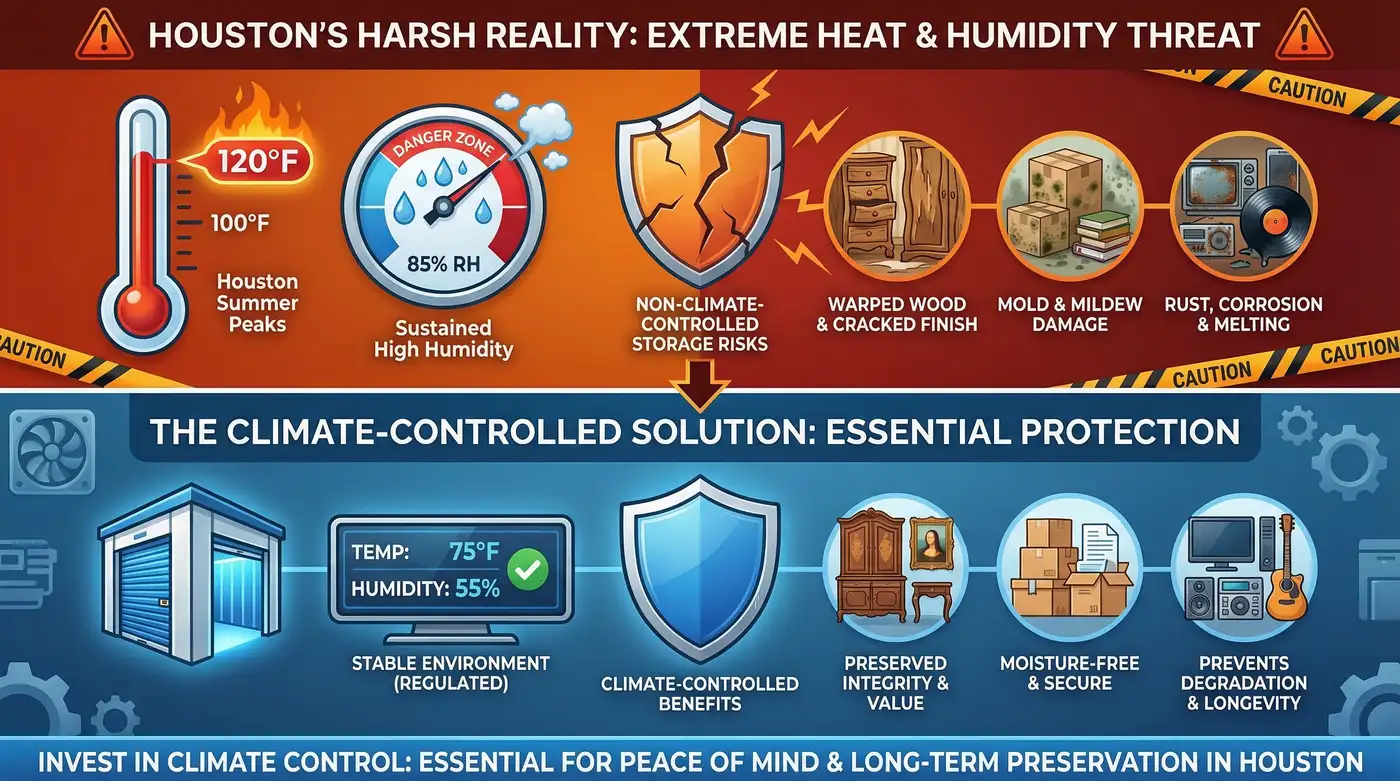
The critical difference: temperature-controlled manages heat but NOT moisture. Climate-controlled manages both. In Houston, the humidity is the bigger threat.
Houston’s Dual Threat: Heat + Humidity
- ⚠ 80%+ relative humidity is the Houston average. Inside an unventilated metal storage unit, humidity can be even higher.
- ⚠ 110-120°F inside standard units during June through September. Metal roofs and walls absorb and radiate solar heat.
- ⚠ The condensation cycle: units heat up during the day, then cool overnight. The temperature drop causes moisture to condense on cooler surfaces — your furniture, electronics, and boxes — every single morning.
- ⚠ Mold in 24-48 hours at these conditions. Once mold establishes on fabric, leather, or wood, remediation costs far exceed the monthly climate-control premium.
Item-by-Item Damage Risk in Houston Storage
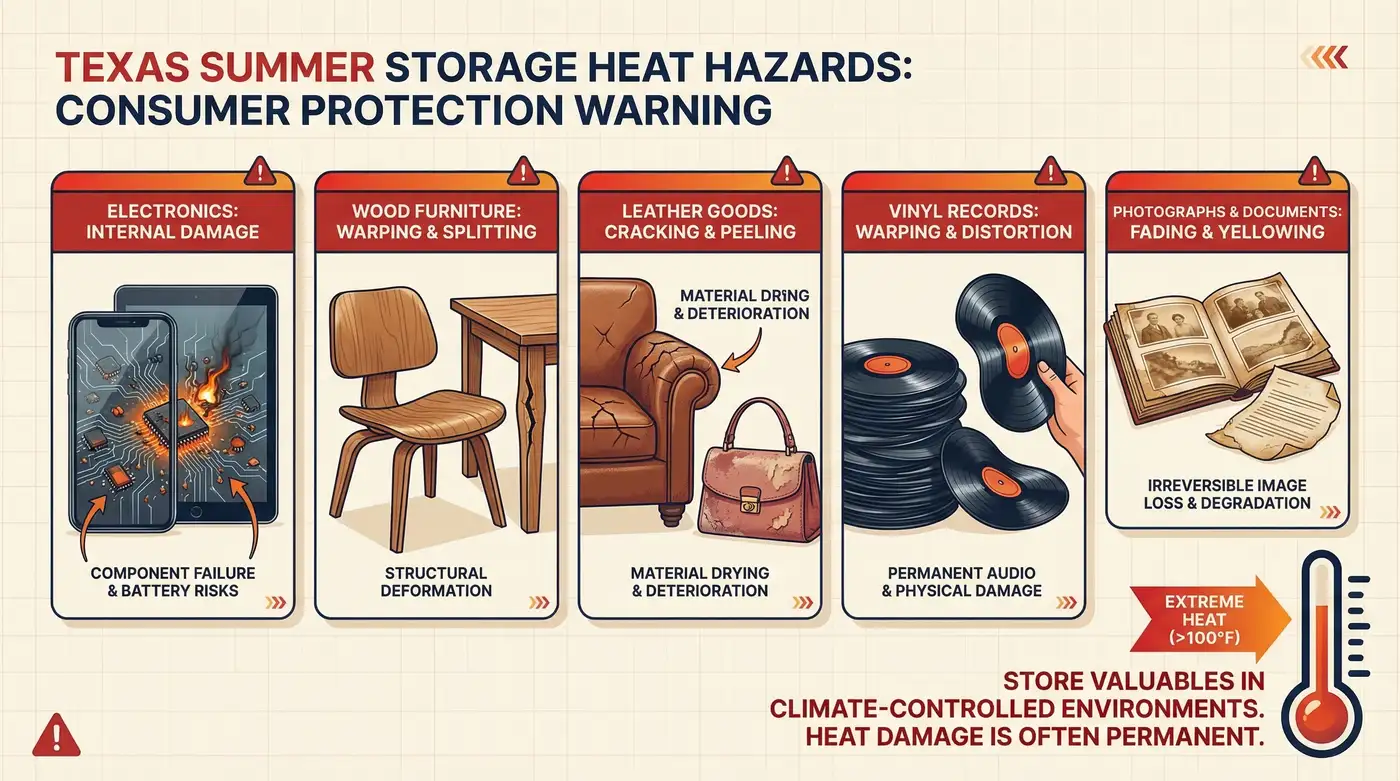
Not everything needs climate control. Use this table to decide what goes in a standard unit versus what requires protection.
| Item | Risk Level | What Happens |
|---|---|---|
| Electronics | CRITICAL | Circuit boards fail above 95°F. Solder joints crack, capacitors degrade, condensation corrodes contacts. |
| Musical Instruments | CRITICAL | Wood warps, glue joints fail, strings corrode, piano felts grow mold, reed instruments crack. |
| Wine | CRITICAL | Cork dries and shrinks above 70°F, allowing oxidation. Heat accelerates aging. Irreversible damage. |
| Medications | CRITICAL | Most medications degrade above 77°F. Efficacy loss is invisible but dangerous. FDA storage guidelines require controlled temp. |
| Wood Furniture | HIGH | Warps, cracks, and splits from humidity cycling. Veneer peels. Joints loosen as glue softens in heat. |
| Leather / Vinyl | HIGH | Cracks from heat, grows mold from humidity, develops musty odor that is difficult to remove. |
| Photographs | HIGH | Yellowing, fading, and mold growth. Photos stick together permanently in humid conditions. |
| Documents / Books | HIGH | Paper absorbs moisture, warps, and grows mold. Ink can run or fade. Binding glue softens and fails. |
| Vinyl Records | HIGH | Warp irreversibly at 140°F (easily reached in standard Houston units). Jackets grow mold. |
| Artwork / Canvas | HIGH | Canvas stretches and sags from humidity. Paint flakes in heat cycles. Frames warp. |
| Mattresses | HIGH | Dust mite explosion in humidity. Mold grows inside foam. Odor becomes permanent. |
| Clothing / Textiles | HIGH | Mold and mildew in Houston humidity. Musty smell permanently embeds in fabric. Moth damage increases. |
| Holiday Decorations | LOW-MEDIUM | Plastic items fine. Paper ornaments and fabric items at risk. Electronics (lights) can degrade. |
| Metal Tools | LOW | Surface rust possible but easily managed with WD-40 or oil coating before storage. |
| Plastic Furniture | LOW | UV discoloration if near windows, otherwise durable. No moisture absorption issues. |
When Standard Storage IS Acceptable
Standard (non-climate-controlled) storage works for these items, with caveats:
- ● Metal tools and equipment — coat with oil or WD-40 before storing
- ● Concrete, stone, and ceramic items — inherently moisture-resistant
- ● Sealed plastic bins (short-term, not through summer) — contents must be completely dry before sealing
- ● Outdoor/patio furniture — already designed for weather exposure
Key rule: if the item is designed to live outdoors, standard is fine. If it normally lives inside your air-conditioned home, it needs climate control in Houston.
How to Verify a Facility’s Climate Control Claims
Many facilities market “climate-controlled” when they only have basic AC. Use these five steps before signing a lease.
Ask about separate dehumidification
True climate control requires dedicated dehumidification equipment beyond the HVAC system. AC removes some moisture but cannot maintain consistent humidity levels in Houston’s subtropical climate.
Ask for specific temperature and humidity ranges
A legitimate climate-controlled facility will quote you ranges: 55-85°F temperature and 30-55% relative humidity. If they can only discuss temperature, they do not have humidity control.
Visit and feel for consistent cool, dry air
Walk the hallways. The air should feel noticeably dry and cool, not muggy. Check multiple areas — some facilities only climate-control certain wings while advertising the whole building.
Ask about HVAC maintenance history
Well-run facilities service HVAC quarterly at minimum. Ask what the response time is for equipment failures and whether they have backup systems. A broken dehumidifier in July means your belongings are unprotected.
If they cannot answer, it is just AC
Vague answers like “we keep it comfortable” or “the building is air-conditioned” mean basic AC only. True climate-controlled facilities are proud of their systems and will show you the equipment.
Notable: West Fuqua Storage in SW Houston maintains 55% RH — matching the National Archives preservation standard. This is the benchmark for genuine climate control.
The Condensation Cycle: Why Houston Storage Is Different
Houston’s climate creates a daily condensation cycle inside standard storage units that does not exist in drier climates:
- 1 Daytime heating: The metal unit absorbs solar radiation and reaches 110-120°F. Hot air holds more moisture, so relative humidity inside the unit decreases slightly.
- 2 Evening cooling: As the sun sets, the metal walls cool faster than the air inside. The air’s capacity to hold moisture drops.
- 3 Condensation forms: Moisture condenses on the cooler metal walls, ceiling, and any surface cooler than the dew point — including your furniture, boxes, and electronics.
- 4 Repeat daily: This cycle happens every day from April through October. Each cycle adds moisture to porous materials. After weeks of cycling, mold colonies establish and spread.
Climate-controlled units break this cycle by maintaining consistent temperature and humidity 24/7, preventing the condensation that triggers mold and material degradation.
Climate-Controlled Storage FAQs
Frequently Asked Questions
What is the difference between climate-controlled and temperature-controlled storage?
Temperature-controlled storage uses HVAC to keep the unit between 55-85 degrees Fahrenheit, but does NOT regulate humidity. Climate-controlled storage includes both HVAC and active dehumidification, controlling temperature AND humidity. In Houston's 80%+ humidity environment, temperature control alone is often insufficient — you need the dehumidification component to prevent mold and moisture damage.
How much more does climate-controlled storage cost in Houston?
Climate-controlled units typically cost $20-$50 more per month than standard units of the same size. For a 10x10 unit, expect to pay $89-$105 per month for climate-controlled versus $73 average for standard. The premium pays for itself if it prevents even one piece of furniture from developing mold damage.
Can Houston humidity really damage my belongings in a storage unit?
Yes. Houston's average relative humidity exceeds 80%, and standard storage units can reach 110-120 degrees Fahrenheit in summer. At these conditions, mold can begin growing within 24-48 hours on wood, fabric, leather, and paper. The daily temperature swing creates a condensation cycle where moisture forms on cooler surfaces every morning, accelerating corrosion and mold growth.
Is it safe to store electronics in a standard Houston storage unit?
No. Electronic circuit boards begin failing above 95 degrees Fahrenheit due to thermal stress on solder joints and capacitors. Houston standard units regularly exceed 110 degrees in summer. Humidity also causes corrosion on contacts and connectors. Always use climate-controlled storage for computers, TVs, audio equipment, and any item with a circuit board.
How can I tell if a storage facility has real climate control vs just AC?
Ask five specific questions: (1) Do you have separate dehumidification systems or just AC? (2) What are the specific temperature and humidity ranges maintained? (3) Can I visit and feel the air in the hallways? (4) How often is the HVAC system serviced? (5) What happens during a power outage? If they cannot answer these questions specifically, they likely just have basic AC, not true climate control.
What humidity level is safe for stored belongings?
The ideal relative humidity for storage is 30-55%. The National Archives standard is 55% RH, which prevents mold while avoiding over-drying that can crack wood and leather. West Fuqua Storage in SW Houston maintains 55% RH, matching this archival standard. Anything above 65% RH significantly increases mold risk in Houston's warm temperatures.
Related Houston Storage Guides
Storage Cost Guide
Complete pricing for every unit size, standard vs climate-controlled rates, and seasonal pricing patterns.
Neighborhood Guide
Storage pricing, availability, and flood risk for every major Houston neighborhood and suburb.
Storage Checklist
What to ask, what to check, and what to photograph before signing a Houston storage lease.
Sources & References (4)
- [1]Self Storage Association— Industry standards and unit sizing
- [2]Better Business Bureau— Business ratings and complaint history
- [3]NOAA Climate Data— Temperature and humidity data for climate-controlled storage guidance
- [4]Texas Secretary of State— Business entity verification
Reviewed by RelocateMeTX Editorial Team
Content verified March 2026. Relocation information on this page has been reviewed for accuracy against primary sources — see how we verify our data. This guide is for informational purposes only and does not constitute professional financial, legal, or medical advice.