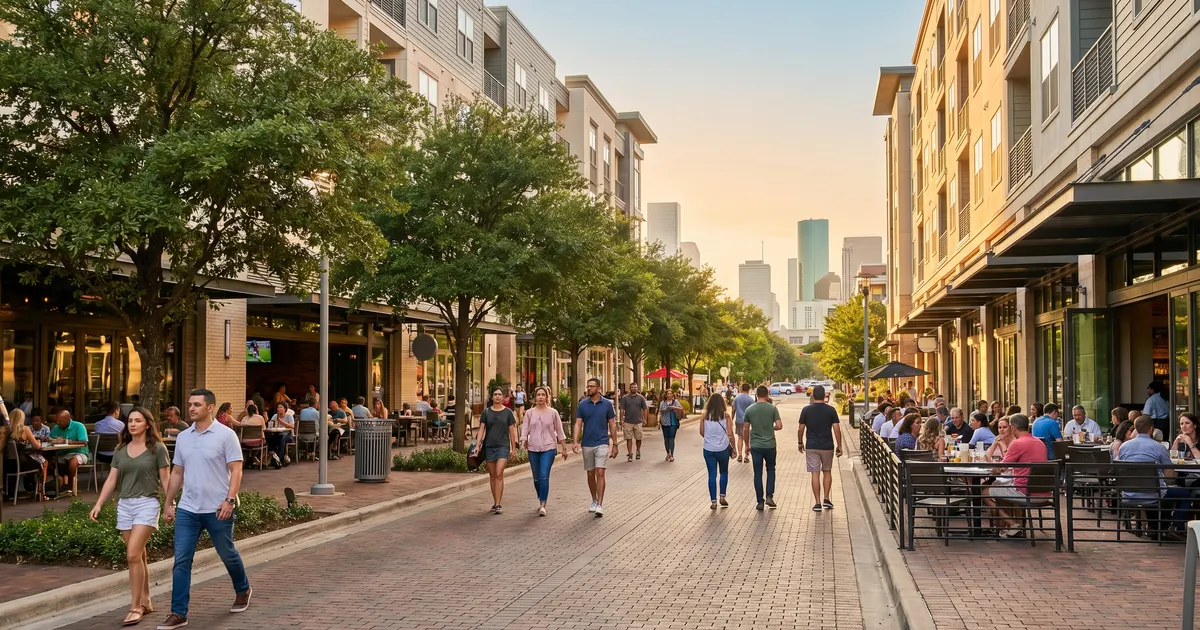
Silicon Hills — Austin's Tech Corridor
From Dell and Sematech in the 1990s to Tesla's Gigafactory and Apple's billion-dollar campus today, Austin has evolved into one of the largest technology employment centers in the United States. Thousands of tech firms operate across the metro, and the Austin Chamber of Commerce counted roughly 196,000 tech workers here in its 2022 tally.
If you are relocating to Austin for a technology role, this guide covers the major tech corridors, top employers, salary expectations, best neighborhoods for tech workers, and the startup ecosystem that makes Silicon Hills tick. For step-by-step relocation logistics, see our Austin moving guide.
What Is Silicon Hills?
Austin's tech identity began in the 1980s when the Microelectronics and Computer Technology Corporation (MCC) chose Austin over 57 other cities for its research consortium. Sematech, the semiconductor research consortium, followed shortly after. Michael Dell founded Dell Computer in his UT Austin dorm room in 1984, and the company grew into one of the region's largest private employers — today it trails H-E-B in the Austin metro but still anchors Round Rock.
The 2010s and 2020s brought a second wave of growth as companies like Tesla, Apple, Google, Amazon, Meta, and Oracle established or expanded major operations in Austin. Tesla moved its corporate headquarters from California to Austin in 2021 and built its largest Gigafactory in Southeast Travis County. Apple's $1 billion campus on West Parmer Lane in northwest Austin began taking employees in 2022. The pandemic-era migration from California accelerated Austin's transformation into a top-tier tech hub. Oracle, which moved its world headquarters here in 2020, announced in 2024 that it intends to shift that headquarters to Nashville over the coming years, though Austin still carries the designation.
Why "Silicon Hills"? The name is a play on Silicon Valley, referencing the limestone hills of the Texas Hill Country that surround Austin. Unlike Silicon Valley's concentration in one corridor, Austin's tech companies are distributed across several distinct geographic areas, from downtown to the northern suburbs to the southeast industrial zone.
Major Tech Corridors
Austin's tech economy is spread across four main geographic clusters. Where you work will heavily influence where you should live.
Downtown Austin
Congress Ave / 2nd Street DistrictThe urban core houses major offices for Google, Meta, Indeed (HQ), Oracle, Atlassian, and dozens of mid-size firms and startups. Downtown is the center of Austin's startup scene, with Capital Factory and numerous coworking spaces within walking distance.
The Domain / North Austin
MoPac & Parmer Lane areaThe Domain mixed-use development has become Austin's second downtown, anchored by Amazon's operations hub and NI, now part of Emerson, on North MoPac. Apple's campus sits a few miles northwest on West Parmer Lane, and the Parmer corridor hosts additional campuses for IBM and numerous semiconductor firms.
Southeast Austin
SH-130 / Del Valle corridorTesla's Gigafactory Texas is the anchor of Austin's newest tech corridor. The facility along the Colorado River reported about 16,500 workers to Travis County for 2025 — down from 21,191 the year before — building the Model Y, the Cybertruck, and next-generation robotics. Samsung's semiconductor fab in Northeast Austin (near Manor) adds thousands more manufacturing and engineering jobs, with roughly 4,500 direct employees across its Austin and Taylor sites.
Round Rock
IH-35 / SH-45 corridorDell Technologies' world headquarters anchors Round Rock's tech presence, with roughly 13,000 local employees. Emerson has run a Round Rock site on Louis Henna Boulevard, though it said in 2026 that it is consolidating those operations onto the former NI campus in north Austin. Round Rock offers a suburban environment with lower housing costs than central Austin.
Top Austin Tech Employers
These companies represent the largest tech employers in the Austin metro area. Each links to a detailed employer page with campus locations, neighborhoods, and commute data.
Tesla
EV manufacturing, AI & robotics
Dell Technologies
PCs, servers, cloud (HQ)
Apple
Engineering, operations, Apple TV+
Amazon
AWS, operations, fulfillment
Samsung Austin Semiconductor
Chip fabrication, R&D (Austin + Taylor)
NI (Emerson)
Test & measurement (HQ)
Oracle
Cloud, database (world HQ)
Indeed
Job search platform (HQ)
Cloud, ads, engineering
Meta
Reality Labs, engineering
Roughly 196,000 people worked in tech across the Austin metro in the Austin Chamber's 2022 count
No state income tax plus campuses for Tesla, Apple, Samsung, Dell, and Amazon keep pulling engineers to Central Texas
Salary Ranges by Role
Austin tech salaries are generally 10-20% below San Francisco and Seattle but significantly above national averages. The absence of state income tax provides an effective 5-13% boost compared to California or New York.
| Role | Salary Range | Notes |
|---|---|---|
| Software Engineer | $120K - $200K | Senior/Staff at FAANG can reach $250K-$400K+ with stock |
| Product Manager | $130K - $190K | Director-level roles $200K+; high demand across all corridors |
| Data Scientist | $110K - $170K | ML/AI specialists command premium; Tesla and Apple top payers |
| UX Designer | $95K - $150K | Lead/Principal roles $160K+; strong demand in enterprise SaaS |
| DevOps / Cloud Engineer | $125K - $185K | AWS and Azure skills in highest demand; Oracle cloud growing |
| Engineering Manager | $170K - $260K | VP-level $300K+; total comp varies widely with equity |
No state income tax advantage: Texas has no personal income tax, so a California or New York offer at the same headline number nets less in take-home pay. How much less depends on your bracket, filing status, and deductions, and Texas claws some of it back through higher property tax. Use our salary comparison calculator to run the numbers for your specific situation.
Best Neighborhoods for Tech Workers
Where you should live depends heavily on which tech corridor you work in. Here are the top picks for different priorities.
Downtown
Urban coreWalk to Google, Meta, Indeed, and Capital Factory. The most walkable neighborhood in Austin with direct access to the 2nd Street District, Rainey Street, and Lady Bird Lake trails.
Mueller
Mixed-useMaster-planned community on the former airport site. Walkable, family-friendly, with easy access to both downtown (10 min) and the Domain/North Austin corridor (15 min). Popular with tech workers who want urban-suburban balance.
East Austin
TrendyAustin's hottest neighborhood for dining, bars, and creative culture. Quick commute to downtown offices and reasonable access to Tesla's Gigafactory via SH-71. Prices have risen significantly but still offer value versus downtown.
Cedar Park
Family suburbAffordable suburb northwest of Austin with excellent Leander ISD schools. Popular with Apple and Domain-area tech workers. New-construction homes, family amenities, and quick access via US-183 and Toll 183A.
Round Rock
Dell HQ suburbHome of Dell Technologies HQ and a growing tech cluster. Excellent Round Rock ISD schools, lower housing costs than central Austin, and a charming downtown district. The commute to central Austin takes 25-35 minutes.
See All Neighborhoods
Full GuideOur full guide ranks all Austin neighborhoods for tech workers by commute time, walkability, dining scene, housing cost, and school quality. Filter by your specific employer campus location.
Coworking Spaces & Startup Ecosystem
Austin's startup ecosystem is one of the most vibrant in the country, fueled by UT Austin's talent pipeline, a deep venture capital community, and dozens of coworking and incubator spaces. Whether you are launching a company, freelancing, or just want a flexible workspace, Austin has options at every price point.
The center of Austin's startup scene, located on Congress Avenue. Capital Factory hosts mentor-led accelerator programs and is the most active early-stage investor in Texas, with connections into the state's angel and VC community.
Premium coworking with locations downtown, at the Domain, and in East Austin. Rates move around, so price a hot desk and a private office directly with each operator. Corporate teams from out-of-state companies often use these as satellite offices.
The IC² Institute at the University of Texas is one of the nation's oldest technology incubators, connecting academic research with commercial applications. UT's computer science, engineering, and business programs produce a steady pipeline of startup founders and tech talent.
Also notable
Frequently Asked Questions
What is Silicon Hills?
Silicon Hills is the nickname for Austin's technology and innovation ecosystem. The term traces back to the era when MCC (Microelectronics and Computer Technology Corporation), which picked Austin over 57 other cities in 1983, Sematech, and a fast-growing Dell put the city on the tech map. Today Silicon Hills spans thousands of technology companies across the Austin metro, from Tesla, Apple, Google, Amazon, and Samsung down to one-room startups. The name draws a parallel to Silicon Valley while referencing Austin's Hill Country geography.
What are the biggest tech companies in Austin?
The largest tech employers in Austin include Tesla (Gigafactory Texas, about 16,500 workers in its 2025 Travis County compliance filing, down from 21,191 a year earlier), Dell Technologies (headquarters in Round Rock, about 13,000 local employees), Apple (West Parmer Lane campus in northwest Austin, roughly 10,000), Amazon (offices plus fulfillment and delivery centers, 10,000+), Samsung Austin Semiconductor (chip fabrication, about 4,500 direct employees across its Austin and Taylor campuses), NI, now part of Emerson (about 4,200), Indeed (global headquarters downtown, about 3,500), Oracle (world headquarters, about 3,000), Meta (about 2,000), and Google (downtown office, about 1,500).
What is the average tech salary in Austin?
The Austin Chamber of Commerce put the average annual tech wage in the metro at about $152,000 in its 2022 data. Individual roles vary widely: software engineers commonly land in the $120,000-$200,000 band depending on experience and employer, product managers in the $130,000-$190,000 band, data scientists $110,000-$170,000, UX designers $95,000-$150,000, and DevOps or cloud engineers $125,000-$185,000. Senior and staff engineers at Apple, Google, Meta, or Tesla can clear $200,000 once stock is counted. Austin base pay generally trails San Francisco, but so does the cost of living, and Texas levies no personal income tax.
Where do tech workers live in Austin?
The most popular neighborhoods for tech workers depend on which corridor they work in. Downtown workers favor East Austin, Mueller, and South Congress. North Austin/Domain workers prefer Cedar Park, Round Rock, and the Arboretum area. Tesla Gigafactory workers often live in Southeast Austin, Del Valle, or Bastrop. Dell employees cluster in Round Rock, Pflugerville, and Georgetown. Generally, East Austin and Mueller offer the best urban lifestyle, Cedar Park and Round Rock provide family-friendly suburban living, and downtown appeals to those seeking walkability.
Is Austin still affordable for tech workers?
Austin is significantly more affordable than San Francisco, Seattle, or New York, but it has become considerably more expensive since 2020. The area median home price is around $460,000, down from the 2022 peak, and central neighborhoods run well above that. One-bedroom apartments average $1,400-$2,200 depending on neighborhood and amenities. On a typical Austin tech wage the math still works far better than it does on the coasts, but entry-level workers and non-tech household members feel the housing squeeze. Suburbs like Round Rock, Pflugerville, and Georgetown offer better value.
How does Austin compare to other tech hubs?
Austin is routinely grouped with San Francisco, Seattle, New York, and Denver/Boulder in rankings of leading U.S. tech markets, though the exact ordering depends on whose methodology you read. Austin's advantages include no state income tax, lower cost of living than coastal markets, a young and growing population, the UT Austin talent pipeline, and an established startup ecosystem. The main challenges are rising housing costs, traffic congestion, limited public transit, and summer heat. The metro continues to attract company relocations and expansions, though it has also seen headquarters decisions move the other way — Oracle said in 2024 it plans to shift its world headquarters to Nashville.