
Moving to Dallas without a job works if you arrive with $18,000 to $25,000 in savings, a marketable skill, and a target industry. Plenty of people do it: DFW added 123,557 residents between July 2024 and July 2025 (Census Bureau), and not all of them had an offer letter when the moving truck pulled up.
It works if you have the math right. It does not work if you’re winging it. The difference between the two comes down to savings, industry targeting, and a willingness to be honest about risk. This guide covers all three.
Comfortable savings: $18,000-$25,000 (4-6 month buffer)
DFW unemployment: 4.7% (BLS, June 2026, not seasonally adjusted; U.S. 4.4% on the same basis)
Hiring now: Healthcare, logistics, construction, tech staffing, hospitality
Cheapest landing zones: Mesquite, Garland, south Dallas, parts of Irving ($1,100-$1,300/month rent)
Know you're moving but still budgeting? Our salary guide for Dallas breaks down exactly what you need at every income tier, from survival (MIT's $48,489 living wage) to comfortable (about $97K).
The Savings Runway: How Much You Actually Need
Moving to Dallas without a job requires a minimum savings runway of $12,000 to $15,000 for a bare-bones two-month landing, or $18,000 to $25,000 for the 4 to 6 month buffer that financial advisors recommend. The gap between those two numbers is the difference between a stressful gamble and a controlled transition.
The Minimum ($12,000-$15,000)
This covers the bare essentials for landing in DFW and surviving two months of job hunting:
- First/last month rent + security deposit: $2,500-$3,500
- Moving costs: $2,000-$5,000 (long-distance) or $800-$1,500 (DIY truck/local)
- Two months of living expenses: $5,000-$7,000
- Rent in an affordable area: $1,100-$1,300/month
- Utilities, phone, renter’s insurance: $400-$500/month
- Food and gas: $500-$600/month
At this level, you need to land a job within 6 to 8 weeks. One unexpected expense, a car repair, a medical bill, and the runway disappears. This is survivable but stressful.
The Comfortable Runway ($18,000-$25,000)
Everything above, plus 4 to 6 months of living expenses instead of two. This buffer changes the experience completely. You can be selective about which job you take rather than grabbing the first offer out of desperation. You can afford to negotiate salary. You can cover an unexpected cost without panic.
Financial advisors recommend this range for a reason: the difference between arriving with two months of runway and six months is the difference between a controlled move and a gamble.
For a full breakdown of monthly costs at every income level, see our Dallas salary guide. Don’t forget the hidden costs that trip up newcomers: property taxes ($690-$725/month on a $500K home), toll roads ($100-$400/month), and summer electricity ($200-$350/month). Our property tax guide covers the full picture.
Sponsored: RelocateMeTX is affiliated with F.A.D Furnished Apartments.
Industries Hiring Right Now in DFW (2026)
The Dallas job market is broad and deep. DFW has 24 companies on the 2026 Fortune 500 list, per CultureMap Dallas, and the metro’s economy spans healthcare, tech, logistics, finance, construction, and hospitality. That diversity is your advantage: if one sector slows down, others are still hiring.

| Industry | Demand | Entry-Level | Mid-Level | Where the Jobs Are |
|---|---|---|---|---|
| Healthcare | Very High | $35K-$50K | $55K-$90K | Medical City, Baylor, Parkland, UT Southwestern |
| Logistics | Very High | $32K-$42K | $45K-$65K | DFW Airport area, South Dallas, Alliance |
| Tech/IT | High | $55K-$75K | $85K-$130K | Richardson Telecom Corridor, Plano Legacy |
| Hospitality | High | $28K-$38K | $40K-$55K | Uptown, Deep Ellum, Frisco, hotel districts |
| Construction | Very High | $35K-$55K | $55K-$85K | Frisco, Prosper, Celina (new construction boom) |
| Finance | High | $45K-$65K | $70K-$120K | Downtown, Uptown, Legacy West, Las Colinas |
| Education | Moderate | $38K-$55K | $55K-$75K | Throughout DFW (teacher shortages in growing ISDs) |
Salary ranges are approximate and depend on experience, certifications, and specific employer. The point: DFW has jobs across every sector. This is not a one-industry town. For a full list of major employers by industry, see the Dallas employers page.
The Temp Agency Bridge
Staffing agencies can get income flowing within 1 to 2 weeks while you search for permanent work. This is a legitimate strategy, not a last resort.
Major agencies operating in DFW: Robert Half, Adecco, Kelly Services, Randstad, and Express Employment. Typical temp assignments include administrative support, warehouse operations, customer service, IT support, and healthcare staffing.
Temp-to-hire is common in DFW. Many companies use temp agencies as a 90-day trial period before extending full-time offers. Pay is usually 10 to 20% less than direct hire, but it is income on day one and it builds local work history on your resume.
Remote Work as a Landing Strategy
If you already have a remote job, moving to Dallas without a local job is dramatically lower risk. Your existing salary plus Dallas’s lower cost of living equals an immediate quality-of-life upgrade. Even freelance or gig income buys time while you network locally.
DFW has coworking options across the metro: WeWork (multiple locations), Common Desk, and Industrious. For the best neighborhoods for remote workers, see our remote work neighborhood guide.
Cheapest Neighborhoods to Land In
The lowest 1BR rents in this guide start at $900 to $1,100 in south Dallas and Balch Springs, with the best-value inner suburbs (Mesquite, Garland, Irving, Grand Prairie) running $1,100 to $1,400. Our Dallas housing guide breaks down rent ranges across all neighborhoods. For someone arriving without a job, minimizing rent is priority one, but location relative to job centers matters just as much as the monthly number.
Inside Dallas proper: South Dallas and the Fair Park area run $900 to $1,200/month for a 1BR. Pleasant Grove is similar at $900 to $1,100. Both are older housing stock and car-dependent, but connected to DART rail or bus routes. West Dallas has pockets at $1,000 to $1,300, though gentrification is pushing some blocks higher.
Inner suburbs (best value): Mesquite and Garland offer 1BR apartments at $1,100 to $1,350, with H-E-B, Walmart, and all essentials nearby. Irving runs $1,200 to $1,400 but puts you closer to DFW Airport and Las Colinas corporate offices, with DART Orange Line access. Grand Prairie ($1,100-$1,350) sits between Dallas and Fort Worth, giving you access to jobs in both cities.
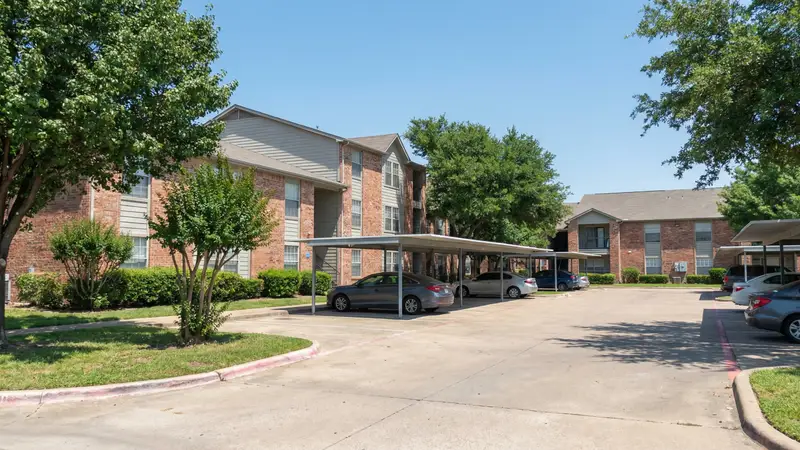
Farther out (cheapest, with trade-offs): Balch Springs and Seagoville drop to $900 to $1,100, but isolation and long commutes eat into your savings through gas and toll costs. Parts of Lancaster and DeSoto run $1,000 to $1,200 south of Dallas.
Full neighborhood breakdown with school ratings and commute times: Dallas Neighborhoods Guide.
The Honest Risk Assessment
The move works for people with $18,000+ in savings, a marketable skill, and a target industry. It does not work for people with under $10,000, no plan, or dependents relying on their income. This section draws the line between the two so you can decide which side you fall on.
- You have less than $10,000 in savings
- You have no marketable skills and no plan to get them
- You're fleeing a bad situation without a plan for what comes next
- You have dependents relying on your income
- You're choosing Dallas randomly, with no specific reason to be in DFW
- You have 4-6 months of expenses saved plus a marketable skill
- You have a remote job or freelance income covering basic costs
- You have a strong professional network in DFW
- You're in an industry hiring aggressively here (healthcare, construction, tech, logistics)
- You've visited, researched neighborhoods, and have a specific plan
The Dallas job market is deep. Twenty-four Fortune 500 headquarters (2026 list) and a 4.7% metro unemployment rate (BLS, June 2026, not seasonally adjusted) mean opportunity exists. But opportunity and guarantee are different things. The savings runway is what converts the first into something closer to the second. For the full pros and cons of moving to Dallas, that post covers the 12 biggest advantages and 8 honest downsides.
Your First 90 Days: An Action Plan
A structured 90-day timeline turns a no-job move from improvisation into a project with milestones. Start applying before you arrive, bridge income with temp work in week one, and reassess at the 60-day mark if permanent employment has not materialized.
Before you arrive:
- Start applying for jobs 4 to 6 weeks before your move. Many DFW employers do remote interviews.
- Sign a 6-month lease or rent a furnished apartment. Don’t commit to 12 months until you’re employed.
- Research electricity providers on PowerToChoose.org and lock in a plan before move-in day.
Week 1:
- Set up utilities (electricity, gas, internet).
- Get your TollTag if you’ll be driving the tollways.
- Register with 2 to 3 staffing agencies for temp work.
- Update your resume with a DFW address and local phone number.
Weeks 2 through 8:
- Apply aggressively: 5 to 10 applications per day.
- Take temp assignments for income while searching for permanent positions.
- Start the Texas driver’s license process at DPS (you have 90 days).
Months 2 through 3:
- If employed: start settling in. Register your vehicle within 30 days (TxDMV).
- If still searching: reassess your target salary tier and industry. Consider a temp-to-hire position as a bridge.
- Full operational moving checklist: Dallas Moving Checklist.
Have the Math, Then Make the Move
This is a calculated risk, not a blind leap. With $18,000 to $25,000 in savings, a marketable skill, and a target industry, the odds are in your favor. DFW’s broad economy (4.7% metro unemployment in June 2026 per BLS, not seasonally adjusted) gives you a real market to work. Register with staffing agencies on day one, apply to 5 to 10 positions daily, and keep your monthly burn under $2,500 until you’re employed.
Get the job market data from our Dallas employers page, run the budget math with our salary guide, and read the complete Moving to Dallas guide for the full picture. Then decide.
Frequently Asked Questions
How hard is it to find a job in Dallas right now?
DFW’s unemployment rate was 4.7% in June 2026, not seasonally adjusted, against 4.4% for the U.S. on the same basis (BLS). The metro added 123,557 new residents between July 2024 and July 2025, and the economy is absorbing them. Most people with transferable professional skills find work within 4 to 8 weeks. Healthcare, construction, logistics, and tech are the strongest sectors. Your timeline depends on your industry, experience level, and how aggressively you apply.
How much money should I save before moving to Dallas without a job?
Minimum $12,000 to $15,000 for a tight 2-month runway. Comfortable: $18,000 to $25,000 for a 4 to 6 month buffer. This covers first/last rent, security deposit, moving costs, and living expenses while you search. The higher number gives you the luxury of being selective rather than desperate. Full budget breakdown here.
What are the cheapest areas to live in Dallas?
Mesquite, Garland, Irving, and Grand Prairie offer 1BR apartments in the $1,100 to $1,400 range. Inside Dallas proper, south Dallas and Pleasant Grove drop to $900 to $1,200. Trade-off: cheaper areas are more car-dependent and farther from the major job centers in north Dallas and Plano. Full neighborhood guide here.
Should I move to Dallas or Houston without a job?
Both have strong job markets. Dallas has a broader corporate base (a deep Fortune 500 roster, major tech presence) and better public transit (DART rail, 93+ miles). Houston has a lower cost of living, the Texas Medical Center, and more energy sector jobs. If you’re in healthcare, Houston might edge Dallas out. For most other industries, Dallas’s broader employer base gives you more options. Full comparison here.