
The salary needed to live in Dallas splits into three tiers: survival starts at MIT’s living wage of $48,489 for a single adult, comfort for a single person takes about $97,000, and a family of four needs $150,000 to $180,000 to live well in a good school district without constant budget stress. The gap between those tiers is wider than most people expect.
Those numbers draw on MIT’s Living Wage Calculator, SmartAsset’s 2026 comfortable-salary method, and Census data. But the raw salary figures only tell half the story. Where you live in DFW, whether you buy or rent, and how many hidden costs you budget for (tolls, property taxes, summer electricity) determine whether a given salary feels tight or generous. This guide breaks it down with actual monthly budgets you can screenshot and compare.
Comfortable single (~$97K): Nice apartment, regular dining out, travel, and real savings. The 50/30/20 budget works at this level.
Comfortable family of 4 (~$150K–$180K): Good suburb, top-rated schools, manageable mortgage, two cars, kids' activities, and retirement contributions.
Planning your Dallas budget? Our complete Moving to Dallas guide covers neighborhoods, property taxes, toll costs, and everything else that affects your monthly number.
The Three Salary Tiers in Dallas
The cost of living in Dallas falls below coastal metros but above the national median. The city of Dallas median household income sits at $74,323 (Census 2024), which means a dual-income household at the median is technically “comfortable” by the numbers below. But comfort means different things in different ZIP codes, and the budget tables make that clear.
Tier 1: The Living Wage ($48,489)
MIT’s Living Wage Calculator sets the minimum for a single adult in Dallas County at $48,489 a year before taxes (updated February 15, 2026). This covers the basics: a modest apartment in Mesquite, Garland, or south Dallas, groceries, a car, and marketplace health insurance. It does not cover savings, dining out, entertainment, vacations, or retirement contributions. This is survival, not a lifestyle.
At $48,489 gross with zero state income tax, your monthly take-home lands around $3,430 (our calculation: 2026 federal income tax for a single filer after the IRS’s $16,100 standard deduction, about $3,640, plus 7.65% Social Security and Medicare, about $3,710, per IRS Topic 751).
| Expense | Low | High |
|---|---|---|
| Rent (1BR, affordable area) | $1,100 | $1,250 |
| Utilities (electric + gas + water) | $200 | $250 |
| Groceries | $350 | $400 |
| Car payment + insurance + gas | $500 | $600 |
| Health insurance (marketplace) | $250 | $350 |
| Phone + internet | $100 | $130 |
| Tolls (if commuting north) | $100 | $200 |
| Total Monthly | $2,600 | $3,180 |
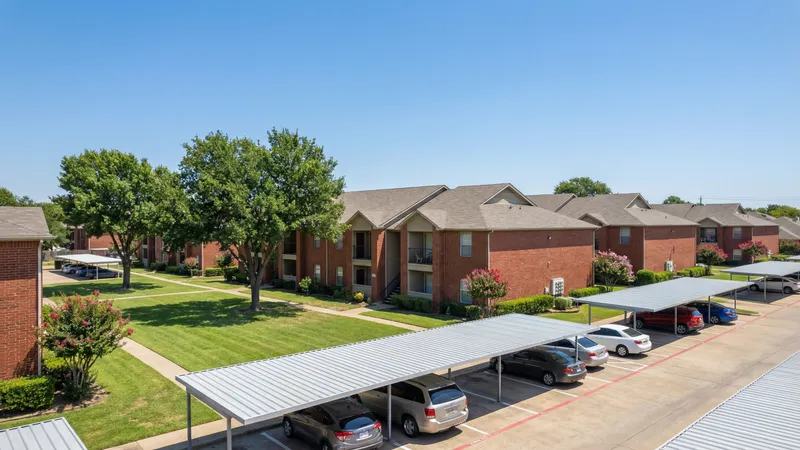
At about $3,430/month take-home, the buffer is roughly $250 to $830. One car repair or medical bill wipes it out. Most people at this level have roommates, skip tolls by taking longer free routes, and live paycheck to paycheck. If you’re moving to Dallas at this income, have a plan to earn more within 12 to 18 months. Browse current openings on our Dallas top employers page.
Tier 2: Comfortable Single (about $97,000)
This is the salary range where Dallas starts working for you. SmartAsset’s method (MIT’s living wage doubled under a 50/30/20 budget) gives about $97,000 for a single adult in Dallas County, starting from MIT’s $48,489 single-adult living wage (our calculation). At $100K in Texas with no state income tax, your take-home is roughly $6,500 to $6,800 per month.
You can rent a solid 1BR in Uptown or Knox-Henderson ($1,600 to $1,900), eat out several times a week, save aggressively, travel, and build toward homeownership. The 50/30/20 budget (50% needs, 30% wants, 20% savings) works comfortably at this level.
| Expense | Low | High |
|---|---|---|
| Rent (1BR, nice area) | $1,600 | $1,900 |
| Utilities | $200 | $300 |
| Groceries | $400 | $500 |
| Car + insurance + gas | $500 | $650 |
| Health insurance (employer) | $100 | $200 |
| Dining out + entertainment | $400 | $600 |
| Phone + internet | $100 | $130 |
| Tolls | $100 | $200 |
| Savings + investing | $500 | $1,000 |
| Total Monthly | $3,900 | $5,480 |
At $6,600/month take-home ($100K gross), the buffer is $1,120 to $2,700. That’s breathing room. You can absorb a surprise expense, take a vacation, and still grow your savings. This is the income level where the pros of moving to Dallas genuinely outweigh the cons for most single adults.
Tier 3: Comfortable Family of Four ($150,000–$180,000)
Families need more, and the math shifts from rent to mortgage. At this income level (usually dual income), you can buy a 3 to 4 bedroom home in a top school district, run two cars, fund kids’ activities, and save for retirement without constant stress.
Where the range comes from: the family budget below tops out at $10,250 a month, and a married couple filing jointly needs about $150,000 gross in 2026 to take home that much after federal income tax ($32,200 standard deduction) and FICA. At $180,000 there’s roughly $1,800 a month left over on top (our calculation). SmartAsset’s method sets a higher bar: doubling MIT’s $107,251 living wage for two working adults with two children in Dallas County gives about $214,000 (our calculation).
The mortgage math on a $450,000 home in a solid suburb (Frisco, Plano, Coppell, Allen): 20% down ($90,000), 6.2% rate on a 30-year fixed, equals roughly $2,200/month in principal and interest. But that’s not the full picture. Add property taxes, insurance, HOA, and MUD/PID:
- P&I: $2,200/month
- Property taxes ($450K, ~2.23% combined before exemptions; ~1.58–1.74% effective for a new buyer after the homestead exemption): $580–$650/month
- Homeowners insurance: $200–$250/month
- HOA: $50–$150/month
- MUD/PID (new construction): $100–$200/month
- Total housing: $3,130–$3,450/month
| Expense | Low | High |
|---|---|---|
| Mortgage + taxes + insurance + HOA | $3,130 | $3,450 |
| Utilities (larger home) | $300 | $400 |
| Groceries (family of 4) | $800 | $1,000 |
| Two cars + insurance + gas | $900 | $1,200 |
| Health insurance (family, employer) | $300 | $500 |
| Kids activities / childcare | $500 | $1,500 |
| Dining out + entertainment | $400 | $600 |
| Phone + internet | $150 | $200 |
| Tolls (two commuters) | $200 | $400 |
| Savings + retirement | $500 | $1,000 |
| Total Monthly | $7,180 | $10,250 |
At $165K combined gross (about $11,140/month take-home for a married couple filing jointly, our calculation), the buffer ranges from roughly $890 to $3,960. Childcare is the biggest swing variable. A family spending $1,500/month on daycare lives a very different life from one where both kids are in public school. If you’re targeting the pricier suburbs (Southlake, Prosper), push the household income target to $200K+ to maintain that same comfort margin. For school district comparisons by suburb, see our Dallas schools guide.
For the full neighborhood breakdown by school rating and price, see: Dallas housing overview.
Sponsored: RelocateMeTX is affiliated with F.A.D Furnished Apartments.
The Hidden Costs That Blow Dallas Budgets
Four recurring expenses catch newcomers off guard in Dallas: property taxes, toll roads, summer electricity, and MUD/PID fees. Prices are still climbing, too: the Bureau of Labor Statistics put the Dallas-Fort Worth-Arlington all-items CPI-U up 2.9% for the 12 months ending July 2026. These four costs are the reason people earning “enough on paper” still feel squeezed in DFW.
Property Taxes (~$700/month on a $500K home)
The city of Dallas combined property-tax rate is about 2.23% of assessed value before exemptions (Dallas ISD + City + County + Parkland Hospital + Dallas College). On a $400,000 home that’s roughly $8,900/year before exemptions. After you file the homestead exemption, a new owner’s effective rate is about 1.58 to 1.74% (it varies with which local-option exemptions you claim). On a $500,000 home, that works out to $8,300 to $8,700 per year, or $690 to $725 per month added to your mortgage. New construction in MUD/PID districts (Frisco, Prosper, Celina) adds another $200 to $400/month, and some suburbs run higher still, up to ~2.5%+ combined. Texas ranks as the 7th-highest property tax state. The homestead exemption removes $140,000 from your school district taxable value (an extra $60,000 if you’re 65+ or disabled, for $200,000 combined), which is why the effective rate lands below the combined rate. Full details: Dallas property tax guide.
Toll Roads ($100–$400/month)
Northern suburb commuters pay NTTA tolls daily. The TollTag rate is $0.22/mile. A Frisco-to-Downtown round trip on the Dallas North Tollway costs $8 to $12/day, or $180 to $260/month. Add George Bush Turnpike segments and the bill climbs. Free alternatives exist but add 15 to 30 minutes each way.
Summer Electricity ($200–$350/month)
June through September, your AC runs around the clock. A 2,500 sq ft home can hit $300+ in July and August. (See our Dallas weather page for monthly averages.) Texas electricity is deregulated: choose your provider on PowerToChoose.org before you move in, or get assigned the most expensive default rate.
HOA + MUD/PID Fees ($50–$400/month)
Over 90% of new suburban construction carries an HOA ($50 to $150/month). MUD/PID assessments in master-planned communities add $200 to $400/month on top. These fees don’t appear in the home’s listing price. Ask for the full tax-and-assessment disclosure before making an offer. The Dallas Central Appraisal District site shows current assessed values and all taxing entities for any property.
How Dallas Compares to Where You’re Coming From
A $100,000 salary in San Francisco buys roughly the same lifestyle as $85,000 to $95,000 in Dallas, according to cost-of-living indices from the Bureau of Economic Analysis. The conversion works in your favor, but not as dramatically as the “no income tax” headline suggests. Here’s what your current salary buys in equivalent Dallas lifestyle:
| Your Current City | Current Salary | Dallas Equivalent | What You Keep |
|---|---|---|---|
| San Francisco | $150,000 | $85,000–$95,000 | Housing savings + ~$12,000/yr in state income tax |
| New York City | $130,000 | $80,000–$90,000 | Housing savings + ~$10,000/yr in state/city income tax |
| Los Angeles | $120,000 | $80,000–$90,000 | Housing savings + ~$8,000/yr in state income tax |
| Chicago | $110,000 | $95,000–$100,000 | Comparable housing, but no state income tax (~$5,000/yr) |
| Austin | $110,000 | $100,000–$105,000 | 10–20% housing savings, similar taxes |
These are rough equivalents based on cost-of-living indices and tax differences. Your actual experience depends on neighborhood, housing type, and whether you buy or rent. The biggest variable is homeownership: property taxes in Dallas County add $690 to $725/month on a $500K home, a cost that doesn’t exist for renters. We ran the state-by-state numbers on when the no-income-tax math actually breaks even; for movers from Florida or Washington, it never does.
For a deeper metro-to-metro breakdown, see our Houston vs. Dallas cost of living comparison and the California to Texas moving guide.
Many California transplants see "no state income tax" and assume everything is cheaper. But California's Prop 13 caps property tax increases at 2% per year regardless of how much your home appreciates. Texas has no such cap. If your Dallas home's appraised value jumps 10%, your property tax bill jumps 10%. Every single year. Budget for rising taxes, not a fixed rate. This catches more California transplants off guard than any other single cost.
Budget by Neighborhood Tier
A $100,000 salary stretches to $1,400 rent and minimal tolls in Forney, or shrinks to $2,400 rent and zero commute costs in Uptown. The neighborhood you pick determines whether that salary feels flush or tight. Here’s how monthly costs shift across three DFW tiers based on current 2026 pricing:
| Uptown / Urban ($$$) | Frisco / Plano ($$) | Forney / Mesquite ($) | |
|---|---|---|---|
| 1BR Rent | $1,800–$2,400 | $1,400–$1,700 | $1,100–$1,350 |
| 3BR Home Purchase | $500K–$800K+ | $400K–$600K | $280K–$380K |
| Monthly Property Tax | $700–$1,200 | $650–$1,000 | $450–$650 |
| Tolls to Downtown | $0 (you're there) | $150–$260 | $50–$100 (highways) |
| Grocery Access | Walkable (Tom Thumb, Central Market) | Drive (H-E-B, Kroger) | Drive (H-E-B, Walmart) |
| School District | Dallas ISD (varies widely) | Frisco / Plano ISD (top-rated) | Forney ISD (growing) |
| Best For | Singles, young professionals | Families, corporate workers | Value seekers, remote workers |
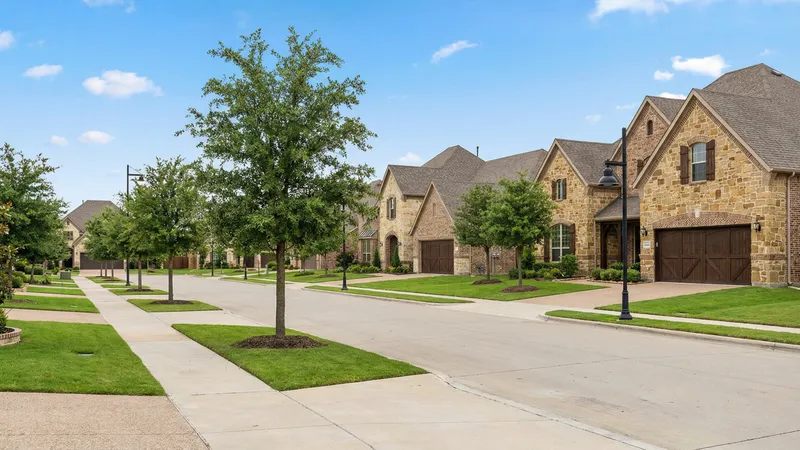
Not sure which tier fits? Our Dallas Neighborhoods Guide breaks down 25+ areas with school ratings, tax rates, and commute times.
Single Adults Need $97K; Families Need $150K+
Dallas is affordable compared to coastal cities, but “affordable” and “cheap” are different things. A single adult needs roughly $97K to live comfortably. A family of four should target $150K to $180K. At any income level, the hidden costs (property taxes, tolls, summer electricity, MUD/PID fees) determine whether you feel rich or stretched.
Run the budget math for your specific neighborhood before you commit. Use the tables above, adjust for your family size, and add 10% for expenses you didn’t anticipate. That buffer is the difference between moving to Dallas and thriving here.
Want the take-home number for your salary? Run your figure through our Dallas salary comparison calculator to see your cost-of-living-adjusted pay and exactly what zero state income tax adds to your monthly take-home.
Start with our complete Moving to Dallas guide for the full picture, or jump to the operational moving checklist if you’re ready to go. For the full Dallas lifestyle picture — neighborhoods, food, arts, job market, weather, and what everyday life is actually like — see our living in Dallas, Texas guide.
Frequently Asked Questions
Is $100,000 a good salary in Dallas?
Very good. It’s about a third more than the city of Dallas median household income of $74,323, and with zero state income tax, your take-home is about $6,500 to $6,800/month. After cost-of-living adjustment, $100K in Dallas has the purchasing power of roughly $80,103 nationally. A single person can live well in most neighborhoods. A family will need dual income, especially in top school districts where homes start above $500K.
Can you live on $50,000 a year in Dallas?
Technically yes, but it’s tight. $50K with no state income tax gives you about $3,530/month take-home after 2026 federal income tax and FICA (our calculation). After rent ($1,100 to $1,300 for a basic 1BR in Mesquite or Garland), utilities, car costs, and groceries, you’ll have very little left for savings or entertainment. Most people at this income have a roommate or live in south Dallas. Not recommended unless you have a clear path to higher income within 12 to 18 months.
What's the biggest hidden cost of living in Dallas?
Property taxes. On a $500,000 home in Dallas County, you’ll pay $8,300 to $8,700 per year, or $690 to $725 added to your monthly mortgage payment. In newer master-planned communities with MUD/PID assessments, add another $200 to $400/month. Many newcomers budget for the mortgage but forget the tax bill. Full breakdown here.
How much should I save before moving to Dallas?
For renters: $8,000 to $12,000 minimum (first/last month rent, security deposit, moving costs, and 1 to 2 months of emergency reserves). For buyers: add closing costs (2–5% of purchase price) plus your down payment. Moving without a job lined up? Save 4 to 6 months of living expenses ($15,000 to $25,000 minimum). Dallas isn’t cheap to land in, but it’s cheaper to sustain than most major metros once you’re established. Moving without a job guide.
Is $80,000 a good salary in Dallas?
$80,000 is comfortable for a single person in most DFW neighborhoods, especially with no state income tax pulling more into your take-home (roughly $5,200 to $5,500/month after federal tax and standard deductions). It’s below the roughly $97,000 “comfortable” threshold that SmartAsset’s method gives for Dallas County (our calculation), but workable if you avoid the most expensive zip codes (Uptown, Park Cities, Frisco) and budget property taxes carefully if you buy. For a family of four, $80,000 is tight — you’d need a partner working or a low-cost suburb (Mesquite, Garland, far north exurbs) to make it sustainable.
How much do you need to earn to buy a house in Dallas?
The City of Dallas median sale price is $448,703 (Redfin, August 2026), so a 20% down payment is about $89,700, and the income lenders want on the rest depends on your rate, debt levels and credit score. Add property taxes before you set an income target: the city of Dallas combined rate is ~2.23% of assessed value before exemptions, about $9,991 a year at that price, and a new owner’s effective rate after the homestead exemption is ~1.58–1.74%, about $7,090 to $7,810 a year. In top school districts (Frisco, Highland Park, Carroll), where median home prices run $500,000 to $1.2M+, plan for $175,000 minimum and $250,000+ for the elite zip codes. If you’re putting less than 20% down, add PMI to your monthly cost and budget another $10,000 to $15,000 of annual income capacity.
What's a comfortable salary for a family of four in Dallas?
$150,000 to $180,000 is the realistic comfort zone for a family of four buying a home in a top-rated school district. That income covers a $500K-$650K home in Frisco, Plano, or Allen ISD (mortgage + property taxes + HOA), plus childcare or activities, two reliable cars, and a meaningful savings rate. Lower-cost suburbs (Garland, Mesquite, Rockwall) can work at $110,000 to $130,000 if you’re flexible on schools. Below $100,000, a family of four faces hard trade-offs between school quality, commute time, and discretionary spending. Dual-income households at this level are the DFW norm.
Related Dallas Resources
- Dallas Property Taxes Explained — the line item most newcomers underestimate
- Cost of Living in Dallas by Neighborhood — full breakdown by area
- Dallas Major Employers — Fortune 500 HQs and salary benchmarks
- Moving to Dallas Complete Guide
- Houston vs Dallas Cost of Living
- Dallas City Guide — daily-life overview